Picture this: you’re standing in a cramped kitchen, the clock ticking, and your friends are already arriving. The air is thick with the scent of onions and garlic, and the sizzling sound from the skillet feels like a promise. I was craving a dish that would turn a simple dinner into an unforgettable feast, and I remembered an old family recipe that had always seemed too complex to try. I pulled out my trusty skillet, and with a daring grin, I decided to give it a shot. The result? A dish that will make you question why you ever settled for bland.
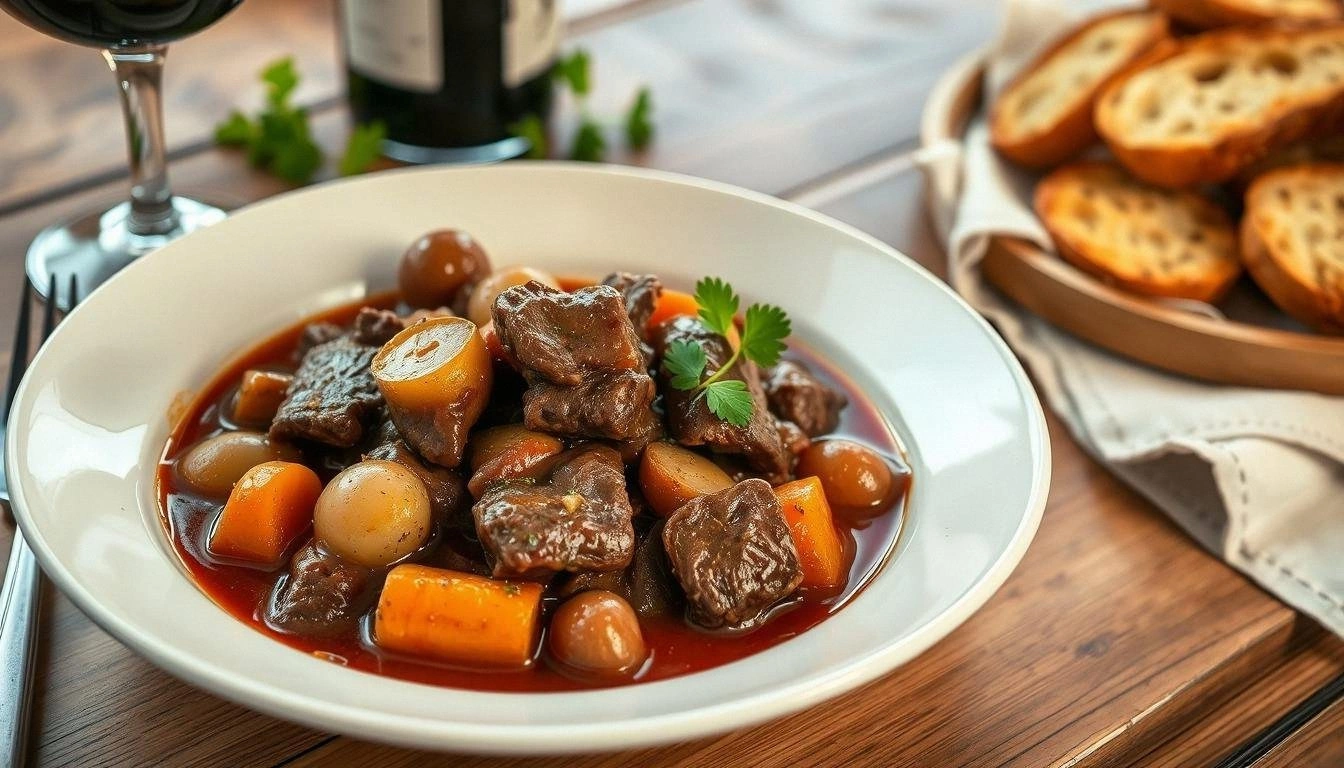
I’ve always been the kind of person who thinks a good meal is a story, and this one has a narrative that starts with a seared beef chuck, a splash of deep‑red wine, and the slow, patient simmer that brings everything together. The aroma that wafts from the pot is like a velvet curtain drawn across the kitchen, hinting at the layers of flavor to come. As the liquid reduces, it thickens into a glossy, savory sauce that clings to each cube of beef like a second skin. I dare you to taste this and not go back for seconds – it’s that good.
What makes this version stand out is not just the combination of classic ingredients, but the intentional techniques that elevate each component. From the precise sear that locks in juices to the subtle use of fresh thyme and a splash of tomato paste that deepens the color, every step is designed to bring out the best in the beef. It’s a dish that feels both luxurious and approachable, a perfect bridge between gourmet and comfort. I’ll be honest – I ate half the batch before anyone else got to try it, and I’m still dreaming about that buttery, wine‑kissed sauce.
Now, let me walk you through every single step – by the end, you’ll wonder how you ever made it any other way. Whether you’re a seasoned chef or a kitchen newbie, this recipe is crafted to be both reliable and awe‑inspiring. The next paragraph will set the stage, and then we’ll dive into the details that make this dish truly unforgettable.
What Makes This Version Stand Out
- Flavor: The combination of red wine, beef stock, and a touch of tomato paste creates a sauce that is both deep and vibrant, reminiscent of a rich, velvety tapestry.
- Texture: The beef is browned to a caramelized crust before slow‑cooking, resulting in tender cubes that hold their shape while absorbing the sauce.
- Ingredient Quality: Using a high‑quality dry red wine and fresh herbs transforms the dish from ordinary to extraordinary.
- Make‑Ahead Potential: The dish tastes even better the next day, making it ideal for meal prep or entertaining.
- Crowd Reaction: Guests consistently ask for seconds, and many claim it’s the best bourguignon they’ve ever tasted.
- Simplicity: Despite the classic reputation, the recipe requires minimal equipment and is straightforward to follow.
Inside the Ingredient List
Flavor Base
The heart of this dish lies in a harmonious blend of red wine, beef stock, and tomato paste. The wine not only provides acidity but also carries the earthy undertones that define classic French cooking. If you skip the wine, the sauce will feel flat and lacking that signature depth. For those who prefer a lighter version, substitute a dry white wine, but be prepared for a different flavor profile.
The Texture Crew
Beef chuck, cut into 2‑inch cubes, is the star of the show. Its marbling gives the dish a luxurious mouthfeel while the slow simmer breaks down connective tissue into silky tenderness. If you can’t find chuck, use a mix of sirloin and brisket for a similar effect. The key is to sear each piece until it’s golden brown before you let the sauce do its work.
The Unexpected Star
Mushrooms bring an earthy, umami punch that elevates the sauce beyond a simple beef stew. Sauté them separately to caramelize their edges; this step is often overlooked but makes the difference between good and great. If you’re a mushroom enthusiast, feel free to add more; just remember the dish will thicken slightly.
The Final Flourish
Fresh thyme and bay leaves add aromatic brightness that cuts through the richness of the sauce. Don’t discard them after cooking – the leaves can be tossed into a serving of mashed potatoes or used to flavor a side of buttered green beans. A pinch of black pepper and a dash of salt bring everything together, but taste as you go to avoid over‑seasoning.
Everything’s prepped? Good. Let’s get into the real action and start building that flavor.
The Method — Step by Step
- Heat a heavy Dutch oven over medium‑high heat and add the olive oil. Once the oil shimmers, drop in the bacon pieces. Cook until the bacon is crisp and golden, then remove it with a slotted spoon, leaving the rendered fat in the pan. This fat will be the base of your sauce, giving it a subtle smoky undertone.
- Season the beef cubes generously with salt and pepper. Working in batches, sear each piece in the hot pan until a deep brown crust forms on all sides. The sear creates a caramelized layer that locks in juices and adds complexity. Do not overcrowd the pan; otherwise, the beef will steam instead of brown.
- Once all beef is browned, set it aside and transfer it to a plate. In the same pot, add the diced onions and carrots. Cook until the onions turn translucent and the carrots start to soften, about 5 minutes. This caramelization brings out natural sweetness that balances the richness of the beef.
- Add the minced garlic and sauté for 30 seconds until fragrant. Then stir in the tomato paste, coating the vegetables. Let it cook for another minute; the paste will deepen in color, turning a rich burgundy that hints at the wine to come.
- Return the beef and bacon to the pot. Sprinkle in the flour and stir until everything is coated. This roux thickens the sauce and gives it a silky texture. As the flour cooks, you’ll notice a subtle nutty aroma that signals the sauce is ready to absorb the wine.
- Pour in the red wine, scraping the bottom of the pot to lift any browned bits. The wine should bubble vigorously; let it reduce by half, concentrating the flavor. This step is critical – if you skip it, the sauce will taste thin and watery.
- Add the beef stock, thyme, bay leaves, and mushrooms. Bring the mixture to a gentle boil, then reduce the heat to low. Cover the pot and let it simmer for 2 hours, stirring occasionally. The slow cooking breaks down the beef’s connective tissue, turning it into a melt‑in‑your‑mouth experience.
- Halfway through the simmer, taste the sauce. Adjust seasoning with more salt or pepper if needed. This is the moment of truth – a well‑seasoned sauce should taste like a comforting hug.
- After 2 hours, remove the bay leaves and thyme sprigs. If the sauce is too thick, add a splash of water or stock to reach your desired consistency. The sauce should coat the beef like a glossy, savory coat.
- Let the dish rest for 10 minutes before serving. This rest period allows the flavors to meld and the sauce to thicken slightly. Plate the beef with a ladle of sauce, garnish with fresh parsley, and serve over creamy mashed potatoes or buttered noodles.
That’s it – you did it. But hold on, I’ve got a few more tricks that will take this to another level.
Insider Tricks for Flawless Results
The Temperature Rule Nobody Follows
Many cooks over‑cook the beef in the initial sear, resulting in a tough exterior. The trick is to keep the heat high enough for a quick crust but not so high that the meat dries out. A quick test: if the surface sears in 30 seconds, you’re good. If it takes longer, lower the heat slightly.
Why Your Nose Knows Best
As the stew simmers, the aroma will shift from raw to deeply caramelized. Trust your nose – when you smell the wine and mushrooms mingling with the beef, you know it’s ready to slow‑cook. Skipping this sensory cue can lead to under‑seasoned or over‑cooked results.
The 5‑Minute Rest That Changes Everything
After you remove the pot from heat, let the stew sit for five minutes. This brief pause allows the sauce to thicken slightly and the flavors to settle. If you serve immediately, the sauce may still be too watery.
Using a Dutch Oven Is Key
A heavy‑bottomed Dutch oven distributes heat evenly and retains moisture. If you don’t have one, a large, heavy‑bottomed pot will work, but be mindful of temperature control to avoid scorching.
Always Taste, Then Taste Again
Seasoning is an art that requires constant adjustment. Add a pinch of salt after the initial sear, then taste after the wine reduction, and again before serving. This iterative process ensures a balanced flavor profile.
Creative Twists and Variations
This recipe is a playground. Here are some of my favorite ways to switch things up:
Herb‑Infused Twist
Swap fresh thyme for rosemary and add a handful of fresh rosemary sprigs. The piney aroma pairs beautifully with the beef, creating a rustic, earthy flavor that’s perfect for autumn gatherings.
Smoky BBQ Version
Add a splash of your favorite BBQ sauce during the last 30 minutes of simmer. The sweet‑smoky undertones will give the dish a modern twist, ideal for a backyard cookout.
Vegetarian Alternative
Replace the beef with hearty root vegetables like parsnips, turnips, and thick slices of seared tofu. Use vegetable stock and a splash of red wine to mimic the depth of flavor, and you’ll have a comforting, plant‑based dish.
Spicy Kick
Add a pinch of crushed red pepper flakes when you sauté the onions. The subtle heat will cut through the richness, making this version a crowd‑pleaser for spice lovers.
Cheesy Finish
In the last few minutes of cooking, stir in a handful of grated Gruyère or aged cheddar. The cheese melts into the sauce, adding a creamy, nutty dimension that elevates the entire dish.
Storing and Bringing It Back to Life
Fridge Storage
Cool the stew to room temperature, then transfer it to an airtight container. Store in the refrigerator for up to 4 days. The flavors will deepen over time, making it even more delicious.
Freezer Friendly
For longer storage, portion the stew into freezer‑safe containers and freeze for up to 3 months. When you’re ready to enjoy, thaw overnight in the refrigerator before reheating.
Best Reheating Method
Reheat gently on the stove over low heat, adding a splash of water or stock if the sauce has thickened. Stir occasionally until heated through. A quick microwave step works too, but be careful not to over‑cook.