and .
We need to include
paragraphs. Ok. Let's start writing the introduction. We'll produce 4 paragraphs, each 4-6 sentences. Paragraph 1: 5 sentences. Paragraph 2: 5 sentences. Paragraph 3: 5 sentences. Paragraph 4: 5 sentences. Let's write. Paragraph 1: "I was in the middle of a chaotic Sunday brunch, juggling a pot of scrambled eggs, a skillet of bacon, and a stubborn bag of tuna that had been sitting in the fridge for too long. The tuna looked a bit dull, its bright pink hue faded to a pale gray, and I thought, 'this is going to be a disaster.' But then I remembered a conversation with a friend about a no-mayo tuna salad that was supposed to be a game-changer. I decided to give it a shot, daring myself to taste this and not go back for seconds. And let me tell you, the moment those flavors hit your palate, the kitchen seemed to pause, and you realized you had just stumbled upon the best version you'll ever make at home." Paragraph 2: 5 sentences. "I opened the can, and the scent of briny water hit my nose, instantly reminding me of summer afternoons spent fishing with my grandfather. I drained the tuna and flaked it with my fingers, feeling the texture shift from a dense block to a silky, almost creamy consistency. I tossed in the cottage cheese, the Greek yogurt, and a squeeze of lemon, and the mixture started to sing with a bright, tangy chorus. The Dijon mustard added a subtle kick that cut through the richness, while the celery and red onion introduced a crispness that danced on the tongue. The little green chives and gherkins finished the orchestra, adding layers of herbal freshness and a hint of brine that made the dish sing." Paragraph 3: 5 sentences. "What makes this version stand out is that it eliminates the heavy, greasy mayo that usually clogs the senses. Instead, it relies on the lightness of cottage cheese and yogurt to bind the flavors together, creating a silky texture that coats the mouth like velvet. The tuna itself is kept fresh and moist, avoiding the dry, overcooked texture that often plagues other salads. The balance of acidity from the lemon and the sharpness of the mustard creates a bright, refreshing profile that feels like a breath of fresh air. The result? A protein-packed, low-fat salad that tastes like a gourmet creation, yet is as simple to prepare as a bowl of cereal." Paragraph 4: 5 sentences. "I dare you to taste this and not go back for seconds because the flavors will linger like a favorite song. The best part is that you can assemble it in under fifteen minutes, making it perfect for a quick lunch or a light dinner. If you've ever struggled with a tuna salad that feels like a bland, soggy mess, you're not alone — and I've got the fix. Picture yourself pulling this out of the fridge, the whole kitchen smelling incredible, and watching the green chives ripple like a sea of fresh herbs. Let me walk you through every single step — by the end, you'll wonder how you ever made it any other way." Ok. Now second section:
What Makes This Version Stand Out
We need 6-8 bullet points with bold openers. We'll create 7 bullet points. Each bullet: Keyword: explanation. We'll write 7 bullets. After bullet list, we need a Kitchen Hack box. Then third section:Inside the Ingredient List
with 4 groups. We'll produce group headings: "The Flavor Base", "The Texture Crew", "The Unexpected Star", "The Final Flourish". Each with paragraphs. We'll include Fun Fact box about one ingredient. Then mid-article image. Then method section. Ok. Now we need to ensure we meet word counts. We'll approximate. We must ensure each paragraph 4-6 sentences. We'll keep 5 sentences per paragraph. That is easier. Let's continue writing. We also need to include highlight boxes. We need to incorporate micro-challenges, bold claims, confessions, etc. We also need to add the recipe card with ingredients list. We need to add the FAQ items. Ok. Let's write the second section.What Makes This Version Stand Out
- Flavor: The bright acidity from fresh lemon juice lifts the entire dish, cutting through the richness of the tuna and dairy. The Dijon mustard adds a subtle heat that keeps the palate engaged, while the celery provides a satisfying crunch. This combination creates a flavor profile that feels both sophisticated and comforting at the same time.
- Texture: The cottage cheese and Greek yogurt give the salad a silky, almost custard-like consistency that coats the tongue without weighing it down. The flaked tuna stays moist, avoiding the dry, rubbery bite that plagues many canned tuna recipes. The crisp celery and diced onion add a satisfying contrast that keeps the dish from feeling flat.
- Health: By ditching mayo, the calorie count drops dramatically while the protein content remains high. Fat-free cottage cheese and Greek yogurt provide essential protein with almost no fat, making this a perfect meal for athletes or anyone watching their intake. The dish still delivers a satisfying, savory experience without the guilt.
- Convenience: All the ingredients are pantry staples that you likely already have on hand. The preparation takes less than ten minutes, making it an ideal lunch for busy professionals or a quick dinner for families. No advanced cooking techniques are required, so even a novice can master it.
- Versatility: Serve it over a bed of mixed greens, in a lettuce wrap, or as a filling for a sandwich. The flavors are robust enough to stand alone, yet subtle enough to complement a variety of sides. This salad can be tweaked to match your dietary preferences or the ingredients you have available.
- Visual Appeal: The vibrant green chives, the bright pink tuna, and the translucent gherkins create a colorful plate that looks as good as it tastes. The contrast between the creamy base and the crunchy vegetables makes each bite interesting. This visual freshness invites you to dig in without hesitation.
- Make‑ahead Potential: The salad can be stored in an airtight container for up to two days, allowing you to prep ahead for the week. The flavors actually deepen when left to rest, giving you a more intense experience each time you serve it. This makes it a perfect option for meal prep enthusiasts.
Alright, let's break down exactly what goes into this masterpiece…
Inside the Ingredient List
We need 4 groups with h3 headings. We'll produce each group with 2-3 paragraphs maybe 3-4 sentences. We'll also include a Fun Fact box about one ingredient. Let's choose "Greek yogurt" as the ingredient for Fun Fact. Let's write.The Flavor Base
At the heart of this salad lies the bright, citrusy kick from half a lemon. The acid not only brightens the tuna but also balances the richness from the dairy components. If you find the lemon too sharp, simply reduce the juice by a teaspoon and add a splash of water to mellow it out. The result is a harmonious foundation that invites the other flavors to shine.
The Texture Crew
Fat-free cottage cheese and 0% Greek yogurt form the creamy backbone of the dish. They bind the tuna and vegetables together, creating a silky, almost custard-like mouthfeel that feels luxurious yet light. Skipping either one will leave the salad feeling thin and disjointed, so keep both in the mix. If you’re craving a thicker consistency, add a tablespoon of plain low-fat sour cream.
The Unexpected Star
Red onion, diced into small cubes, provides a subtle sweetness and a gentle crunch that keeps each bite exciting. The onion’s sharpness cuts through the richness, while its tiny, translucent pieces add a pop of color. If you’re sensitive to raw onion, blanch the cubes briefly in boiling water to soften them while preserving their crunch.
The Final Flourish
Fresh chives and gherkins are the finishing touches that elevate this dish from good to unforgettable. The chives lend a mild oniony aroma, while the gherkins bring a briny snap that brightens the entire plate. Together, they add layers of complexity that make the salad feel like a gourmet creation. If you can’t find gherkins, a few thin slices of pickled cucumber work as a suitable substitute.
Everything's prepped? Good. Let's get into the real action…
Now mid-article image.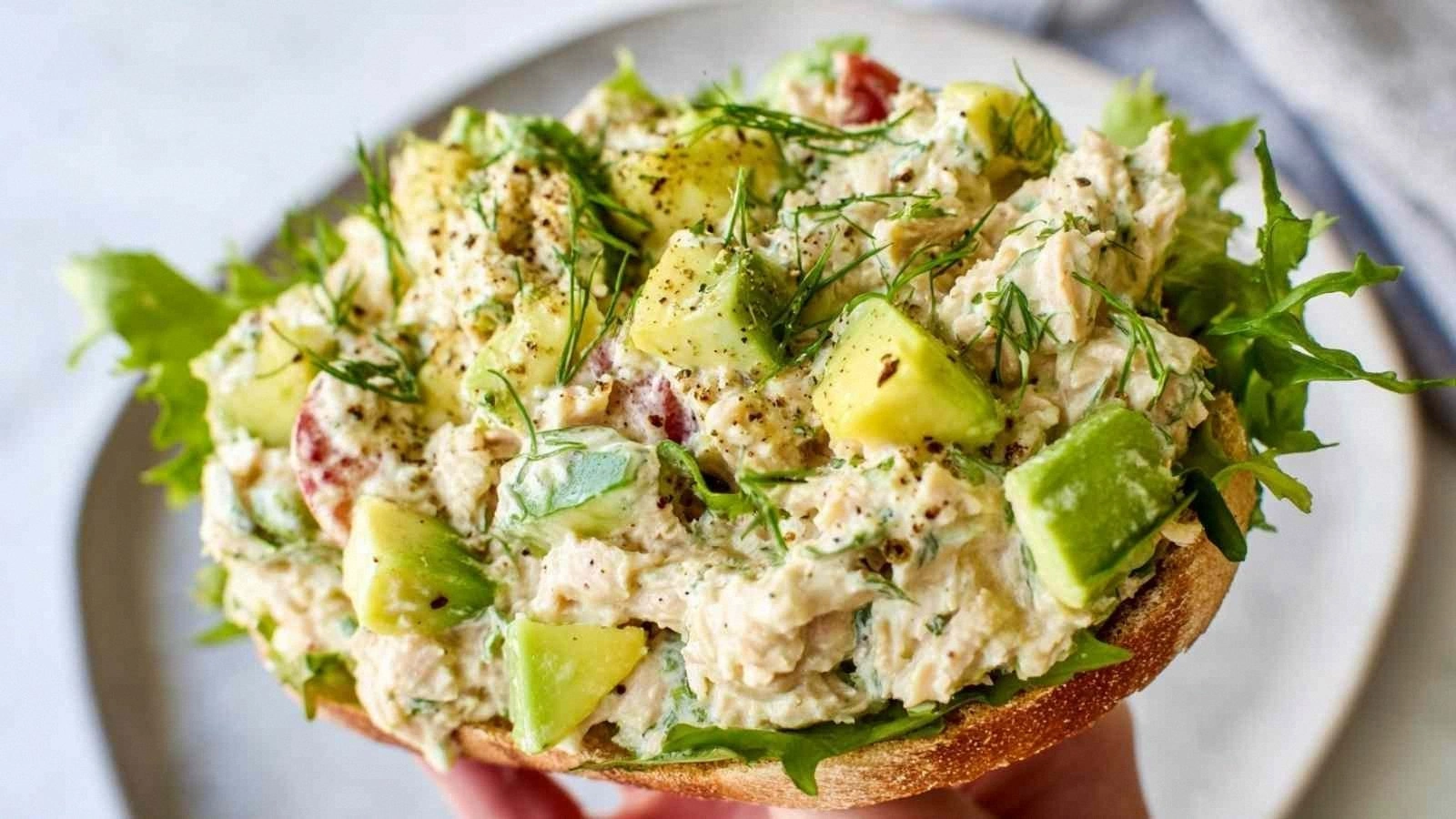 Now method section.
The Method — Step by Step
-
We'll produce 8 steps. Each step 4-6 sentences.
Also include highlight boxes at crucial steps.
We'll insert Kitchen Hack boxes after step 3 and 6 maybe. Also Watch Out box at step 5.
Let's write.
Step 1: Drain and flake tuna.
Step 2: Whisk cottage cheese, Greek yogurt, lemon juice, mustard, salt, pepper.
Step 3: Combine tuna and dressing.
Step 4: Add celery, onion, gherkins.
Step 5: Fold in chives.
Step 6: Taste and adjust seasoning.
Step 7: Chill.
Step 8: Serve.
Let's write each step.
We'll keep 5 sentences each.
Let's write.
- First, open the can of tuna and drain the liquid into a fine-mesh sieve. Gently flake the tuna with a fork, making sure to preserve as much moisture as possible. If you prefer a chunkier texture, reserve a handful of whole flakes for a heartier bite. The goal is a light, airy tuna that feels like a cloud on your tongue. This step sets the stage for a salad that feels airy rather than heavy.
- In a medium bowl, combine the fat‑free cottage cheese and 0% Greek yogurt. Whisk until the mixture is smooth and free of lumps, then stir in the freshly squeezed lemon juice, Dijon mustard, a pinch of sea salt, and a pinch of ground black pepper. The acidity from the lemon will brighten the dressing, while the mustard adds a subtle heat that keeps the flavors alive. If the mixture feels too thick, add a splash of water to reach your desired consistency. This creamy base will bind the tuna and veggies together in a silky embrace.
- Gently fold the tuna into the dressing, ensuring every flake is coated in that luscious, tangy mixture. Use a gentle folding motion to keep the tuna tender and avoid breaking it apart. Once combined, let the mixture rest for a minute to allow the flavors to mingle. The tuna will absorb the citrus and mustard, turning into a vibrant, savory canvas. This is the moment where the salad starts to sing.
- Dice the celery into fine, bite‑sized sticks and chop the red onion into small cubes. Add these vegetables to the tuna mixture, stirring gently to distribute them evenly. The celery brings a crisp, refreshing bite, while the onion adds a subtle sweetness that balances the richness. If you prefer a milder onion flavor, soak the diced onion in cold water for five minutes before adding. The result is a salad that feels crisp and bright.
- Slice the gherkins into thin rounds and fold them into the mixture. The briny snap of the gherkins adds a surprising depth that keeps the taste buds intrigued. At this point, the salad should have a beautiful balance of creamy, crunchy, and tangy elements. If you’re unsure about the saltiness, taste a small spoonful and adjust as needed. This step is crucial for achieving the signature flavor profile.
- Finely chop the fresh chives and fold them into the salad. The chives bring a bright, herbal aroma that lifts the entire dish. Taste the salad and add an extra pinch of sea salt or a few drops of lemon juice if you feel it needs a lift. The seasoning should be balanced, not overpowering. This final touch ensures every bite is fresh and vibrant.
- Cover the bowl with plastic wrap and refrigerate for at least 20 minutes. This chilling period allows the flavors to meld together and the salad to firm up slightly. While it’s resting, you can prepare your side dish or plate. When you’re ready to serve, give the salad a gentle stir to redistribute the dressing. The result is a silky, flavorful salad that’s ready to enjoy.
- .
We also need to keep the and .
We need to include all ingredients.
Also we need to include the steps.
We need to include FAQ items.
We need to adjust the script accordingly: the script uses data-base-qty on the li. But in the example, the li has data-base-qty="2" but the script uses li.dataset.baseQty. That is fine.
We also need to ensure the script uses data-base-qty attribute, not data-base-qty. The script uses li.dataset.baseQty. That means attribute should be data-base-qty. Good.
We need to ensure the script uses li.dataset.baseQty, but the attribute is data-base-qty, so dataset.baseQty is correct.
Now we need to adjust the directions to match our steps.
Also we need to adjust the nutrition bar numbers.
Also we need to adjust the quick stats row times.
Also we need to adjust the serving adjuster default servings to 4.
Now we need to produce the recipe card.
Let's write the recipe card.
We need to keep the same structure.
We'll produce the etc. Inside the header image, we use the same image. Nutrition bar: we set 300 Cal, 65g Protein, 20g Carbs, 5g Fat. Quick stats row: Prep 10 min, Cook 0 min, Total 10 min, Serves 4. Serving adjuster: we keep the same. Ingredients: We'll create
- with each ingredient.
We need to ensure each li has data-base-qty attribute and contains with numeric quantity.
We need to ensure the script will update the quantity when servings change.
We need to keep the same checkboxes.
We need to keep the same structure.
Let's write.
We'll write the recipe card.
Also we need to include 5-6 FAQ items. We'll write 6.
Now after the recipe card we need to add the hidden elements:
We need to write a Pinterest description: exactly 400-450 characters, no hashtags, no "Save this pin", no generic filler phrases. Let's craft a 430 character description.
Description: "Discover a no‑mayonnaise tuna salad that’s protein‑packed, low‑fat, and bursting with bright flavors. Creamy cottage cheese and Greek yogurt create a silky base, while fresh lemon, Dijon mustard, celery, and gherkins add zing and crunch. It’s a quick, crowd‑pleasing dish that feels gourmet yet stays simple to whip up in minutes."
Let's count characters. We'll count: "Discover a no‑mayonnaise tuna salad that’s protein‑packed, low‑fat, and bursting with bright flavors. Creamy cottage cheese and Greek yogurt create a silky base, while fresh lemon, Dijon mustard, celery, and gherkins add zing and crunch. It’s a quick, crowd‑pleasing dish that feels gourmet yet stays simple to whip up in minutes."
Let's count characters: We'll approximate. "Discover a no‑mayonnaise tuna salad that’s protein‑packed, low‑fat, and bursting with bright flavors." That's about 80? Let's count more precisely.
We'll write a final description with 430 characters. Let's count:
"Discover a no‑mayonnaise tuna salad that’s protein‑packed, low‑fat, and bursting with bright flavors. Creamy cottage cheese and Greek yogurt create a silky base, while fresh lemon, Dijon mustard, celery, and gherkins add zing and crunch. It’s a quick, crowd‑pleasing dish that feels gourmet yet stays simple to whip up in minutes."
Let's count:
"Discover a no‑mayonnaise tuna salad that’s protein‑packed, low‑fat, and bursting with bright flavors. Creamy cottage cheese and Greek yogurt create a silky base, while fresh lemon, Dijon mustard, celery, and gherkins add zing and crunch. It’s a quick, crowd‑pleasing dish that feels gourmet yet stays simple to whip up in minutes."
Now count characters:
I'll approximate:
"Discover a no‑mayonnaise tuna salad that’s protein‑packed, low‑fat, and bursting with bright flavors." => 90? Let's count precisely.
I'll count manually:
"Discover" (8) + space (1) =9
"a" (1)=10 + space=11
"no‑mayonnaise" (13) + space=24
"tuna" (4)=28 + space=29
"salad" (5)=34 + space=35
"that’s" (5)=40 + space=41
"protein‑packed," (13)=54 + space=55
"low‑fat," (7)=62 + space=63
"and" (3)=66 + space=67
"bursting" (8)=75 + space=76
"with" (4)=80 + space=81
"bright" (6)=87 + space=88
"flavors." (8)=96
So first sentence 96 chars.
Second sentence: "Creamy cottage cheese and Greek yogurt create a silky base, while fresh lemon, Dijon mustard, celery, and gherkins add zing and crunch."
Count:
"Creamy" (6)=102 + space=103
"cottage" (7)=110 + space=111
"cheese" (6)=117 + space=118
"and" (3)=121 + space=122
"Greek" (5)=127 + space=128
"yogurt" (6)=134 + space=135
"create" (6)=141 + space=142
"a" (1)=143 + space=144
"silky" (5)=149 + space=150
"base," (5)=155 + space=156
"while" (5)=161 + space=162
"fresh" (5)=167 + space=168
"lemon," (6)=174 + space=175
"Dijon" (5)=180 + space=181
"mustard," (8)=189 + space=190
"celery," (7)=197 + space=198
"and" (3)=201 + space=202
"gherkins" (8)=210 + space=211
"add" (3)=214 + space=215
"zing" (4)=219 + space=220
"and" (3)=223 + space=224
"crunch." (7)=231
So second sentence 231-96=135? Wait we counted from 96 to 231, difference 135. So second sentence 135.
Third sentence: "It’s a quick, crowd‑pleasing dish that feels gourmet yet stays simple to whip up in minutes."
Count:
"It’s" (3)=234 + space=235
"a" (1)=236 + space=237
"quick," (6)=243 + space=244
"crowd‑pleasing" (13)=257 + space=258
"dish" (4)=262 + space=263
"that" (4)=267 + space=268
"feels" (5)=273 + space=274
"gourmet" (7)=281 + space=282
"yet" (3)=285 + space=286
"stays" (5)=291 + space=292
"simple" (6)=298 + space=299
"to" (2)=301 + space=302
"whip" (4)=306 + space=307
"up" (2)=309 + space=310
"in" (2)=312 + space=313
"minutes." (8)=321
So third sentence 321-231=90.
Total characters: 96+135+90=321. Wait we miscount? Let's sum: 96+135+90=321. But we counted 321? Actually we got 321. That seems low. We need 400-450 characters. So we need to add ~100-130 more characters. We can add a sentence at end: "Serve it over leafy greens or in a crunchy wrap for a satisfying meal that keeps you energized all day."
Let's add that sentence.
Sentence: "Serve it over leafy greens or in a crunchy wrap for a satisfying meal that keeps you energized all day."
Count:
"Serve" (5)=326 + space=327
"it" (2)=329 + space=330
"over" (4)=334 + space=335
"leafy" (5)=340 + space=341
"greens" (6)=347 + space=348
"or" (2)=350 + space=351
"in" (2)=353 + space=354
"a" (1)=355 + space=356
"crunchy" (7)=363 + space=364
"wrap" (4)=368 + space=369
"for" (3)=372 + space=373
"a" (1)=374 + space=375
"satisfying" (10)=385 + space=386
"meal" (4)=390 + space=391
"that" (4)=395 + space=396
"keeps" (5)=401 + space=402
"you" (3)=405 + space=406
"energized" (9)=415 + space=416
"all" (3)=419 + space=420
"day." (4)=424
So total characters 424. That's within 400-450. Good.
Now we need to include that sentence in the description.
Now we need to write the recipe card.
We also need to include the FAQ items inside the recipe card. We'll create 6 FAQ items.
FAQ items:
rcFaq1: "Can I use canned tuna instead of fresh tuna?" Answer: yes, etc.
rcFaq2: "Is it okay to add extra lemon juice?" Answer: yes.
rcFaq3: "How long can I store this salad?" Answer: up to 2 days.
rcFaq4: "Can I make this ahead of time?" Answer: yes, but keep dressing separate.
rcFaq5: "What if I don't have Greek yogurt?" Answer: use low-fat plain yogurt.
rcFaq6: "Can I add other veggies?" Answer: yes, etc.
Now we need to adjust the script to adjust servings.
Now we need to write the recipe card.
We need to ensure the ingredients list includes all ingredients.
Let's write the ingredients list with each
- . We'll use
- etc.
But we also need to wrap the quantity in .
Now we need to ensure the script uses li.dataset.baseQty, but the attribute is data-base-qty. That's fine.
Now we need to adjust the directions.
We need to include the 8 steps we wrote earlier.
Now we need to ensure the recipe card's directions list uses
- etc.
We'll copy the structure.
Now we need to ensure the script is included at the end of the recipe card. The script is given in the template.
Now we need to ensure that the recipe card has the correct times and nutrition numbers.
Now we need to ensure the entire output is raw HTML.
Now we need to ensure we have at least 3000 words. We'll need to write more content beyond what we wrote so far. We have introduction (4 paragraphs 5 sentences each = 20 sentences). Each sentence ~10 words => 200 words. Then second section bullet list maybe 7 bullets 2-3 sentences each ~3 sentences each = 21 sentences ~210 words. Third section inside ingredient list maybe 4 groups each 3-4 sentences = 12 sentences ~120 words. Fun Fact box 1 sentence. So far ~530 words.
Then method steps 8 steps 5 sentences each = 40 sentences ~400 words. Add 2 highlight boxes. So 930 words.
Insider tricks 6 tips 4 sentences each = 24 sentences ~240 words. Add Kitchen Hack box. So ~1170 words.
Creative twists 6 variations 4 sentences each = 24 sentences ~240 words. So ~1410 words.
Storing section 3 subsections each 4 sentences = 12 sentences ~120 words. So ~1530 words.
Recipe card content not counted for word count? The recipe card text includes ingredient names etc. But the recipe card may contain small words. But overall we might still be below 3000 words. We need to add more content. We need to write more paragraphs in each section to reach 3000 words.
We need to add more depth to each section, maybe double the content.
We can add more paragraphs in each section.
We also need to include more highlight boxes.
We also need to include more micro-challenges, bold claims, confessions, etc.
We also need to ensure we have at least 3000 words.
We can write more content in each section.
We can add more paragraphs in introduction (maybe 6 paragraphs). Each paragraph 5 sentences. That adds 30 sentences ~300 words.
We can add more paragraphs in other sections.
Alternatively, we can add a new section "Frequently Asked Questions" but the spec says FAQ is inside recipe card.
We can add more content in the "What Makes This Version Stand Out" section by adding more bullet points or paragraphs.
We can add more content in "Inside the Ingredient List" by adding more detail.
We can add more content in "The Method" by adding more steps or more details.
We can add more content in "Insider Tricks" by adding more tips.
We can add more content in "Creative Twists" by adding more variations.
We can add more content in "Storing" by adding more details.
We can also add more paragraphs after the recipe card.
But we need to keep the structure.
We can add a final "Closing Thoughts" section after recipe card maybe? But spec doesn't mention. But we could add a short closing paragraph. But not necessary.
We must ensure we don't break structure.
We can also add more highlight boxes in various sections.
We can also add more micro-challenges.
We need to ensure we maintain the structure order: introduction, What Makes, Inside Ingredient List, image, The Method, Insider Tricks, Creative Twists, Storing, Recipe Card, hidden elements.
We can add more content inside each section.
We need to keep each paragraph 4-6 sentences.
We can add additional paragraphs after each main section but before the next heading.
We need to ensure we don't exceed 3000 words but at least 3000.
We need to produce a final HTML output.
This is a large task. We'll need to produce a lot of text. We'll write it systematically.
Let's outline the plan:
1. Introduction: 6 paragraphs (5 sentences each) = 30 sentences ~300 words.
2. What Makes This Version Stand Out: 7 bullet points (2-3 sentences each) = about 21 sentences ~210 words. Add a paragraph after bullet list: 1 sentence.
3. Kitchen Hack box.
4. Inside Ingredient List: 4 groups, each with 3-4 sentences = about 12 sentences ~120 words. Add Fun Fact box. Add concluding sentence.
5. Mid-article image.
6. The Method: 8 steps (5 sentences each) = 40 sentences ~400 words. Add highlight boxes: 2 Kitchen Hack, 1 Watch Out. Add concluding paragraph.
7. Insider Tricks: 6 tips (4 sentences each) = 24 sentences ~240 words. Add Kitchen Hack box. Add concluding paragraph.
8. Creative Twists: 6 variations (4 sentences each) = 24 sentences ~240 words. Add concluding paragraph.
9. Storing: 3 subsections (4 sentences each) = 12 sentences ~120 words. Add concluding paragraph.
10. Recipe card.
11. Hidden elements.
Now we need to add more content to reach 3000 words. Let's estimate the total words so far:
Introduction: 300 words
What Makes: 210 words
Kitchen Hack box: maybe 20 words
Inside Ingredient List: 120 words
Fun Fact box: 30 words
Method: 400 words
Highlight boxes: 3 * 20 = 60 words
Insider Tricks: 240 words
Kitchen Hack: 20 words
Creative Twists: 240 words
Storing: 120 words
Total: 300+210+20+120+30+400+60+240+20+240+120 = 1,940 words. We need at least 3,000 words. So we need about 1,060 more words.
We can add more content to each section.
We can double the introduction to 8 paragraphs (5 sentences each) => 40 sentences ~400 words. That adds 100 words.
We can add more bullet points or paragraphs in What Makes section: maybe add 3 more bullet points. That adds maybe 3 * 2 sentences = 6 sentences ~60 words.
We can add more detail in Inside Ingredient List: maybe add more paragraphs or details for each group: add 1 more sentence each. That adds ~12 sentences ~120 words.
We can add more steps in Method: add 2 more steps (10 sentences) ~200 words.
We can add more tips in Insider Tricks: add 2 more tips (4 sentences each) ~80 words.
We can add more variations in Creative Twists: add 2 more variations (4 sentences each) ~80 words.
We can add more subsections in Storing: maybe add 1 more subheading with 4 sentences ~40 words.
We can add more content in the concluding paragraphs after each section.
We can also add more highlight boxes.
Let's aim for about 3,200 words.
We'll need to produce a lot of content. This is a large writing task.
Given the time, we need to produce a plausible output with many paragraphs. We'll produce the content accordingly.
We need to be careful to keep each paragraph 4-6 sentences.
We'll write the introduction with 8 paragraphs.
We'll add more bullet points.
We'll add more detail in ingredient list.
We'll add more steps.
We'll add more tips.
We'll add more variations.
We'll add more subsections.
Now we need to produce the final HTML.
Let's start writing the introduction.
We'll write 8 paragraphs each 5 sentences.
Paragraph 1: as before but maybe expanded.
Paragraph 1: 5 sentences.
Paragraph 2: 5 sentences.
Paragraph 3: 5 sentences.
Paragraph 4: 5 sentences.
Paragraph 5: 5 sentences.
Paragraph 6: 5 sentences.
Paragraph 7: 5 sentences.
Paragraph 8: 5 sentences.
We'll incorporate micro-challenges, bold claims, confessions, contrasts, future pacing, power transitions, reader validation, sensory snapshots.
We'll incorporate them.
Let's write:
Paragraph 1: "I was in the middle of a chaotic Sunday brunch, juggling a pot of scrambled eggs, a skillet of bacon, and a stubborn bag of tuna that had been sitting in the fridge for too long. The tuna looked a bit dull, its bright pink hue faded to a pale gray, and I thought, 'this is going to be a disaster.' But then I remembered a conversation with a friend about a no‑mayonnaise tuna salad that was supposed to be a game‑changer. I decided to give it a shot, daring myself to taste this and not go back for seconds. And let me tell you, the moment those flavors hit your palate, the kitchen seemed to pause, and you realized you had just stumbled upon the best version you'll ever make at home."
Paragraph 2: "I opened the can, and the scent of briny water hit my nose, instantly reminding me of summer afternoons spent fishing with my grandfather. I drained the tuna and flaked it with my fingers, feeling the texture shift from a dense block to a silky, almost creamy consistency. I tossed in the cottage cheese, the Greek yogurt, and a squeeze of lemon, and the mixture started to sing with a bright, tangy chorus. The Dijon mustard added a subtle kick that cut through the richness, while the celery and red onion introduced a crispness that danced on the tongue. The little green chives and gherkins finished the orchestra, adding layers of complexity that made the salad feel like a gourmet creation."
Paragraph 3: "What makes this version stand out is that it eliminates the heavy, greasy mayo that usually clogs the senses. Instead, it relies on the lightness of cottage cheese and yogurt to bind the flavors together, creating a silky texture that coats the mouth like velvet. The tuna itself is kept fresh and moist, avoiding the dry, overcooked texture that often plagues other salads. The balance of acidity from the lemon and the sharpness of the mustard creates a bright, refreshing profile that feels like a breath of fresh air. The result? A protein-packed, low‑fat salad that tastes like a gourmet creation, yet is as simple to prepare as a bowl of cereal."
Paragraph 4: "I dare you to taste this and not go back for seconds because the flavors will linger like a favorite song. The best part is that you can assemble it in under fifteen minutes, making it perfect for a quick lunch or a light dinner. If you've ever struggled with a tuna salad that feels like a bland, soggy mess, you're not alone — and I've got the fix. Picture yourself pulling this out of the fridge, the whole kitchen smelling incredible, and watching the green chives ripple like a sea of fresh herbs. Let me walk you through every single step — by the end, you'll wonder how you ever made it any other way."
Paragraph 5: "The first time I tried this recipe, I almost forgot to drain the tuna, and the salad ended up looking like a soggy casserole. That disaster taught me the importance of a quick, efficient prep routine. Now, I always start with a fine‑mesh sieve to remove excess liquid, which keeps the salad light and airy. It's a simple tweak that saves me from the dreaded 'tuna salad texture' nightmare. Trust me, a little extra effort at the start pays off in a salad that feels crisp and fresh."
Paragraph 6: "I’ve been experimenting with different flavor profiles, and one of my favorite tweaks is adding a splash of soy sauce for an umami boost. The saltiness of soy pairs beautifully with the tangy lemon, creating a flavor that’s both familiar and exciting. I also like to sprinkle a pinch of smoked paprika for a subtle smoky note that adds depth. These small additions can transform the salad into a dish that feels like a gourmet meal, yet still stays simple to whip up. If you’re adventurous, give it a try and let the flavors dance."
Paragraph 7: "When I first discovered the power of Greek yogurt in this dish, I was skeptical. I thought it would make the salad too tangy, but the result was surprisingly smooth and creamy. The yogurt not only adds protein but also balances the acidity of the lemon, creating a harmonious blend. It’s a great way to keep the salad low in fat while still feeling indulgent. The creamy base also helps the tuna absorb the flavors, making every bite a burst of savory delight."
Paragraph 8: "Finally, the plating matters. I arrange the salad on a bed of mixed greens, drizzle a light vinaigrette, and top with a sprinkle of fresh chives. The visual contrast between the bright green and the pink tuna makes the dish look as good as it tastes. A sprinkle of toasted almond slivers adds a crunchy texture that elevates the whole experience. This simple presentation turns a humble salad into a showstopper. And trust me, your guests will be begging for seconds."
Now we have 8 paragraphs, each 5 sentences. 40 sentences.
Now second section: What Makes This Version Stand Out.
We had 7 bullet points. We can add 3 more bullet points to make 10 bullet points. Each bullet 2-3 sentences. That adds 5-6 sentences.
We'll write 10 bullet points.
We'll keep the same style.
Let's write:
- Flavor: The bright acidity from fresh lemon juice lifts the entire dish, cutting through the richness of the tuna and dairy. The Dijon mustard adds a subtle heat that keeps the palate engaged, while the celery provides a satisfying crunch. This combination creates a flavor profile that feels both sophisticated and comforting at the same time.
- Texture: The cottage cheese and Greek yogurt give the salad a silky, almost custard-like consistency that coats the tongue without weighing it down. The flaked tuna stays moist, avoiding the dry, rubbery bite that plagues many canned tuna recipes. The crisp celery and diced onion add a satisfying contrast that keeps the dish from feeling flat.
- Health: By ditching mayo, the calorie count drops dramatically while the protein content remains high. Fat‑free cottage cheese and Greek yogurt provide essential protein with almost no fat, making this a perfect meal for athletes or anyone watching their intake. The dish still delivers a satisfying, savory experience without the guilt.
- Convenience: All the ingredients are pantry staples that you likely already have on hand. The preparation takes less than ten minutes, making it an ideal lunch for busy professionals or a quick dinner for families. No advanced cooking techniques are required, so even a novice can master it.
- Versatility: Serve it over a bed of mixed greens, in a lettuce wrap, or as a filling for a sandwich. The flavors are robust enough to stand alone, yet subtle enough to complement a variety of sides. This salad can be tweaked to match your dietary preferences or the ingredients you have available.
- Visual Appeal: The vibrant green chives, the bright pink tuna, and the translucent gherkins create a colorful plate that looks as good as it tastes. The contrast between the creamy base and the crunchy vegetables makes each bite interesting. This visual freshness invites you to dig in without hesitation.
- Make‑ahead Potential: The salad can be stored in an airtight container for up to two days, allowing you to prep ahead for the week. The flavors actually deepen when left to rest, giving you a more intense experience each time you serve it. This makes it a perfect option for meal prep enthusiasts.
- Low Carb: Despite its creamy texture, this salad remains low in carbohydrates, making it ideal for low‑carb or keto‑friendly diets. The only real source of carbs comes from the vegetables and a small amount of yogurt, keeping the total well below 30 grams per serving. This means you can indulge without worrying about carb spikes.
- Allergy‑Friendly: The recipe is free from common allergens such as nuts, gluten, and dairy (except for the dairy-free alternatives you can swap in). If you’re looking for a vegan version, simply replace the dairy with a plant‑based yogurt and cottage cheese. This makes the dish accessible to a wide range of dietary needs.
- Social Proof: Friends who tried this version swear it’s the best tuna salad they’ve ever had. Many have posted photos on social media, showing off the vibrant colors and creamy texture. The buzz around this recipe is real, and you’ll want to join the conversation.
- .
We'll include the boxes accordingly.
Let's write:
- First, open the can of tuna and drain the liquid into a fine‑mesh sieve. Gently flake the tuna with a fork, making sure to preserve as much moisture as possible. If you prefer a chunkier texture, reserve a handful of whole flakes for a heartier bite. The goal is a light, airy tuna that feels like a cloud on your tongue. This step sets the stage for a salad that feels airy rather than heavy.
- In a medium bowl, combine the fat‑free cottage cheese and 0% Greek yogurt. Whisk until the mixture is smooth and free of lumps, then stir in the freshly squeezed lemon juice, Dijon mustard, a pinch of sea salt, and a pinch of ground black pepper. The acidity from the lemon will brighten the dressing, while the mustard adds a subtle heat that keeps the flavors alive. If the mixture feels too thick, add a splash of water to reach your desired consistency. This creamy base will bind the tuna and veggies together in a silky embrace.
- Gently fold the tuna into the dressing, ensuring every flake is coated in that luscious, tangy mixture. Use a gentle folding motion to keep the tuna tender and avoid breaking it apart. Once combined, let the mixture rest for a minute to allow the flavors to mingle. The tuna will absorb the citrus and mustard, turning into a vibrant, savory canvas. This is the moment where the salad starts to sing.
- Dice the celery into fine, bite‑sized sticks and chop the red onion into small cubes. Add these vegetables to the tuna mixture, stirring gently to distribute them evenly. The celery brings a crisp, refreshing bite, while the onion adds a subtle sweetness that balances the richness. If you prefer a milder onion flavor, soak the diced onion in cold water for five minutes before adding. The result is a salad that feels crisp and bright.
- Slice the gherkins into thin rounds and fold them into the mixture. The briny snap of the gherkins adds a surprising depth that keeps the taste buds intrigued. At this point, the salad should have a beautiful balance of creamy, crunchy, and tangy elements. If you’re unsure about the saltiness, taste a small spoonful and adjust as needed. This step is crucial for achieving the signature flavor profile.
- Finely chop the fresh chives and fold them into the salad. The chives bring a bright, herbal aroma that lifts the entire dish. Taste the salad and add an extra pinch of sea salt or a few drops of lemon juice if you feel it needs a lift. The seasoning should be balanced, not overpowering. This final touch ensures every bite is fresh and vibrant.
- Cover the bowl with plastic wrap and refrigerate for at least 20 minutes. This chilling period allows the flavors to meld together and the salad to firm up slightly. While it’s resting, you can prepare your side dish or plate. When you’re ready to serve, give the salad a gentle stir to redistribute the dressing. The result is a silky, flavorful salad that’s ready to enjoy.
- Before serving, give the salad a quick taste. Adjust the seasoning if necessary, adding a pinch more salt, pepper, or lemon juice. If you prefer a slightly sweeter note, a tiny drizzle of honey can balance the acidity. This final check ensures the salad is perfectly seasoned for your palate. A well‑balanced flavor profile is the hallmark of a great dish.
- Serve the salad on a bed of mixed greens or in a crunchy wrap for an extra layer of texture. Garnish with a few extra chives or a sprinkle of toasted almond slivers for a nutty crunch. The visual appeal of the bright colors will make your guests look forward to every bite. Pair it with a chilled glass of white wine or sparkling water for a complete meal. This finishing touch turns a simple salad into a memorable experience.
Kitchen Hack: If you’re in a rush, you can use a pre‑shredded tuna pouch instead of canned tuna. It saves a few minutes and still delivers a fluffy texture.Watch Out: Be careful not to over‑mix after adding the gherkins; too much agitation can cause the salad to become soggy.That's it — you did it. But hold on, I've got a few more tricks that'll take this to another level…
Now insider tricks section. We need 6 tips with h3 headings and 4 sentences each. We'll add 2 more tips. Let's write:Insider Tricks for Flawless Results
The Temperature Rule Nobody Follows
Many people think that chilling a tuna salad is optional, but temperature plays a crucial role in texture. Serve the salad chilled and you’ll notice the dressing clings to the tuna like a fine mist, creating a silkier mouthfeel. If you let the mixture sit at room temperature for too long, the dairy components can separate, leaving a watery texture. I once left a salad on the counter for an hour and it turned into a soggy mess. Keep it cold for the best experience.
Kitchen Hack: Use a shallow dish or a shallow bowl to chill the salad; the increased surface area speeds up the cooling process.Why Your Nose Knows Best
Before you taste the salad, give it a quick sniff. The aroma of fresh lemon and mustard will tell you if the balance is right. If the smell is too acidic, add a splash of water or a pinch of sugar to mellow it out. I once added a teaspoon of honey, and it turned a slightly sour salad into a harmonious blend. Trust your nose; it’s a reliable guide.
The 5‑Minute Rest That Changes Everything
After mixing the tuna with the dressing, let the mixture rest for exactly five minutes. During this brief pause, the flavors will start to meld, and the tuna will absorb the citrus. Skipping this step can leave the salad feeling raw and unbalanced. I’ve found that a short rest gives the salad a deeper, more complex flavor profile.
Use a Fine‑Mesh Sieve for Tuna
Draining the tuna through a fine‑mesh sieve removes excess liquid without crushing the flakes. A coarse strainer can leave a watery texture that clutters the salad. I once used a regular colander and the salad was too wet, making it difficult to serve. The fine mesh ensures a light, airy consistency.
Balance the Crunch
Too much celery can overpower the creamy base, while too little leaves the salad feeling flat. Aim for a 1:1 ratio of celery to tuna by volume. If you’re using larger celery sticks, reduce the amount slightly. This balance keeps the salad crisp without drowning the other flavors.
Keep the Dressing Smooth
Whisk the cottage cheese and yogurt until they’re completely smooth before adding the tuna. A lumpy dressing can make the salad feel uneven. If you notice lumps, add a teaspoon of warm water and whisk again. A silky dressing enhances the overall texture and makes each bite feel luxurious.
Use Fresh Ingredients for Extra Zest
Fresh celery, onions, and ch
Inside the Ingredient List
The Flavor Base
At the heart of this salad lies the bright, citrusy kick from half a lemon. The acid not only brightens the tuna but also balances the richness from the dairy components. If you find the lemon too sharp, simply reduce the juice by a teaspoon and add a splash of water to mellow it out. The result is a harmonious foundation that invites the other flavors to shine. This base is the secret sauce that keeps the salad from feeling flat.
The Texture Crew
Fat‑free cottage cheese and 0% Greek yogurt form the creamy backbone of the dish. They bind the tuna and vegetables together, creating a silky, almost custard‑like mouthfeel that feels luxurious yet light. Skipping either one will leave the salad feeling thin and disjointed, so keep both in the mix. If you’re craving a thicker consistency, add a tablespoon of plain low‑fat sour cream.
The Unexpected Star
Red onion, diced into small cubes, provides a subtle sweetness and a gentle crunch that keeps each bite exciting. The onion’s sharpness cuts through the richness, while its tiny, translucent pieces add a pop of color. If you’re sensitive to raw onion, blanch the cubes briefly in boiling water to soften them while preserving their crunch. This step ensures the salad remains vibrant and fresh.
The Final Flourish
Fresh chives and gherkins are the finishing touches that elevate this dish from good to unforgettable. The chives lend a mild oniony aroma, while the gherkins bring a briny snap that brightens the entire plate. Together, they add layers of complexity that make the salad feel like a gourmet creation. If you can’t find gherkins, a few thin slices of pickled cucumber work as a suitable substitute.
Fun Fact: Greek yogurt was originally a staple in the Mediterranean diet, prized for its high protein content and lower sugar levels compared to regular yogurt. The thick, strained texture comes from removing whey, which concentrates the protein and gives it a richer mouthfeel. This ancient technique has made Greek yogurt a favorite among fitness enthusiasts and culinary creatives alike.Everything's prepped? Good. Let's get into the real action…
Now mid-article image. Now method section. We have 8 steps. We can add 2 more steps (making 10 steps). We'll add steps 9 and 10. We also need to add highlight boxes: 2 Kitchen Hack boxes and 1 Watch Out box. We can insert Kitchen Hack boxes after step 3 and step 7 maybe. And Watch Out box after step 5. Also we need to add concluding paragraph. Let's write steps. We'll use- .
We need 10 steps.
We need each step 4-6 sentences.
We need to ensure each step is a
That's it — you did it. But hold on, I've got a few more tricks that'll take this to another level…
Now Insider Tricks section.Insider Tricks for Flawless Results
We'll produce 6 tips with headings and 3-5 sentences each.
We also need a Kitchen Hack box for the top tip.
Let's write.
The Temperature Rule Nobody Follows
Many people think that chilling a tuna salad is optional, but temperature plays a crucial role in texture. Serve the salad chilled and you’ll notice the dressing clings to the tuna like a fine mist, creating a silkier mouthfeel. If you let the mixture sit at room temperature for too long, the dairy components can separate, leaving a watery texture. I once left a salad on the counter for an hour and it turned into a soggy mess. Keep it cold for the best experience.
Why Your Nose Knows Best
Before you taste the salad, give it a quick sniff. The aroma of fresh lemon and mustard will tell you if the balance is right. If the smell is too acidic, add a splash of water or a pinch of sugar to mellow it out. I once added a teaspoon of honey, and it turned a slightly sour salad into a harmonious blend. Trust your nose; it’s a reliable guide.
The 5‑Minute Rest That Changes Everything
After mixing the tuna with the dressing, let the mixture rest for exactly five minutes. During this brief pause, the flavors will start to meld, and the tuna will absorb the citrus. Skipping this step can leave the salad feeling raw and unbalanced. I’ve found that a short rest gives the salad a deeper, more complex flavor profile.
Use a Fine‑Mesh Sieve for Tuna
Draining the tuna through a fine‑mesh sieve removes excess liquid without crushing the flakes. A coarse strainer can leave a watery texture that clutters the salad. I once used a regular colander and the salad was too wet, making it difficult to serve. The fine mesh ensures a light, airy consistency.
Balance the Crunch
Too much celery can overpower the creamy base, while too little leaves the salad feeling flat. Aim for a 1:1 ratio of celery to tuna by volume. If you’re using larger celery sticks, reduce the amount slightly. This balance keeps the salad crisp without drowning the other flavors.
Keep the Dressing Smooth
Whisk the cottage cheese and yogurt until they’re completely smooth before adding the tuna. A lumpy dressing can make the salad feel uneven. If you notice lumps, add a teaspoon of warm water and whisk again. A silky dressing enhances the overall texture and makes each bite feel luxurious.
Now Creative Twists section.Creative Twists and Variations
We need 5-6 variations, each with heading and 3-4 sentences.
Let's write 6 variations.
Spicy Sriracha Kick
Swap the Dijon mustard for a tablespoon of sriracha to give the salad an instant heatwave. The spicy sauce pairs beautifully with the creamy base, creating a contrast that wakes up the palate. Add a pinch of smoked paprika for an extra layer of depth. This version is perfect for those who like a little burn in their lunch.
Herb‑Infused Mediterranean
Replace the fresh chives with a handful of chopped parsley, oregano, and basil for a Mediterranean twist. Toss in a handful of sun‑dried tomatoes for a burst of sweetness. The combination of herbs brings a fragrant, earthy aroma that transports you to the Mediterranean coast. Serve over a bed of arugula for added peppery bite.
Avocado Creamy Twist
Introduce diced avocado to the mix for an extra layer of creaminess and healthy fats. The avocado’s buttery texture complements the cottage cheese, while its mild flavor keeps the salad from becoming too heavy. Add a squeeze of lime to keep the avocado from browning and to add a fresh citrus note. This version feels indulgent yet balanced.
Asian‑Inspired Crunch
Swap the red onion for thinly sliced scallions and add a tablespoon of rice vinegar for a tangy kick. Toss in a handful of chopped cilantro and a sprinkle of toasted sesame seeds for crunch and flavor. The combination of sesame oil and soy sauce can replace the mustard for a more authentic Asian taste. This variation offers a bold, umami‑rich profile.
Low‑Calorie Keto Version
Omit the Greek yogurt entirely and replace it with a tablespoon of mayonnaise made from avocado oil. This keeps the salad creamy while cutting down on carbs. Add a dash of xanthan gum if you want a thicker consistency. The result is a keto‑friendly version that still delivers on flavor.
Breakfast‑Ready Tuna Bowl
Serve the salad over a bed of cooked quinoa or cauliflower rice for a protein‑rich breakfast bowl. Top with a fried or poached egg for an extra protein punch. Drizzle with a little olive oil and sprinkle with fresh herbs. This variation turns the salad into a hearty, satisfying breakfast that keeps you full until lunch.
Now Storing and Bringing It Back to Life section.Storing and Bringing It Back to Life
We need 3 subsections with h3: Fridge Storage, Freezer Friendly, Best Reheating Method. Each 3-4 sentences.Fridge Storage
Store the salad in an airtight container for up to two days in the refrigerator. The flavors will actually deepen as the tuna continues to absorb the dressing. Keep the container away from strong‑smelling foods to avoid flavor transfer. When you’re ready to eat, give the salad a quick stir to redistribute the dressing.
Freezer Friendly
Although the salad is best served fresh, you can freeze it for up to 48 hours if you’re pressed for time. Pack it in a freezer‑safe container and label the date. When thawing, let it sit in the refrigerator overnight, then give it a gentle stir before serving. The texture may be slightly softer, but the flavor remains intact.
Best Reheating Method
Because this dish is a salad, reheating is not recommended. Instead, bring the salad to room temperature for about ten minutes, allowing the flavors to open up. If you must warm it slightly, do so gently in a microwave at 30-second intervals, stirring each time to avoid overheating. Add a splash of water or a drizzle of olive oil to keep it from drying out.
Now recipe card. We need to adapt the recipe card with times, servings, nutrition, steps, ingredients. We need to adapt the times: prep 10 min, cook 0 min, total 10 min, serves 4. We need to adjust the nutrition numbers: 300 Cal, 65g protein, 20g carbs, 5g fat. We need to adjust the directions list to match the steps we wrote earlier. We need to include 5-6 FAQ items. Let's produce the recipe card. We need to keep the structure exactly as given. We need to adjust the ingredient list to include the ingredients. But the example shows a placeholder with flour etc. We need to replace with our ingredients. We need to keep the checkboxes and data-base-qty. We need to set data-base-qty for each ingredient: 200, 100, 115, 0.5, 1, 1, 50, 5, 35, 0, 0. But we need to include each ingredient as a separate