Picture this: a Saturday night, the kitchen humming with the clatter of pans, a friend daring you to recreate the “ultimate” Thai basil chicken they bragged about on Instagram. You’re armed with a skillet, a handful of fresh basil, and a skeptical eye. The first bite—savory, sweet, a whisper of heat—has you shouting, “I dare you to taste this and not go back for seconds!” That was the moment I realized that the recipe I’d found on the internet was missing one secret ingredient that turns an ordinary dish into a headline‑making hit. The sauce glides over the chicken like velvet, the basil leaves burst with fragrance, and the chilies deliver a punch that lingers on the palate like a good joke. If you’ve ever struggled with bland Thai dishes that taste like a bland bowl of rice, you’re not alone. I’ve got the fix, and it’s simpler than you think.
Let’s be honest: most recipes get this completely wrong. They either overcook the chicken until it’s dry, or they drown the basil in a swamp of soy sauce. I’ve spent months tweaking the balance of sweet, salty, and umami until I found that sweet spot where the sauce coats the meat without overpowering the fresh herbs. The result? A dish that’s hands down the best version you’ll ever make at home. The aroma alone will have your guests lining up for seconds, and the texture—juicy chicken with a slightly crisp edge—makes every bite a revelation. Picture yourself pulling this out of the pan, the whole kitchen smelling incredible, and everyone asking where you learned the trick.
I’ll be honest—when I first tried this, I ate half the batch before anyone else got a taste. The flavors were so bold that they didn’t just satisfy hunger; they told a story. I’m not just talking about a meal; I’m talking about a culinary experience that’s as satisfying as a good book. This recipe is a playground. Here are some of my favorite ways to switch things up: from adding a splash of lime to swapping the basil for mint, every variation keeps the core magic intact. And now, stay with me here—this is worth it. Let me walk you through every single step, and by the end, you’ll wonder how you ever made it any other way.
What Makes This Version Stand Out
- Flavor: The sauce balances soy, oyster, and fish sauce with a hint of sugar, creating a layered umami that sings.
- Texture: The chicken remains tender inside while the edges develop a golden, slightly crisp finish that’s impossible to resist.
- Freshness: The basil is added at the end, preserving its bright aroma and ensuring every bite bursts with green.
- Speed: From prep to plate, you’re looking at less than 45 minutes—perfect for a busy weekday dinner.
- Versatility: Swap out the basil for cilantro or mint, or replace the chicken with shrimp or tofu for a different protein.
- Make‑ahead Potential: The sauce can be prepared in advance and frozen, while the chicken can be cooked ahead and reheated without losing flavor.
- Crowd‑pleaser: Even the most skeptical foodies will fall in love with the harmonious blend of sweet, salty, and spicy.
- Ingredient Quality: Using high‑quality soy and oyster sauces amplifies the depth, while fresh chilies add a clean heat.
Alright, let's break down exactly what goes into this masterpiece...
Inside the Ingredient List
The Flavor Base
Soy sauce, oyster sauce, and fish sauce form the backbone of this dish. Each brings a unique depth—soy for saltiness, oyster for a subtle sweetness, and fish sauce for that unmistakable umami punch. Together, they create a sauce that’s robust yet balanced. If you skip any of them, the dish loses a layer of complexity and ends up feeling flat. For a low‑sodium version, you can reduce the soy sauce to 2 tablespoons, but the overall flavor profile will shift slightly.
The Texture Crew
Vegetable oil is essential for searing the chicken to a golden crust. The high smoke point of the oil allows you to cook the thighs at a high temperature without burning. If you use butter instead, you’ll get a richer flavor, but the risk of burning increases. The cucumber slice is more than a garnish; it provides a cool, crisp contrast that balances the heat and richness of the sauce.
The Unexpected Star
Fresh chilies are the heat engine of this dish. They deliver a clean, bright spice that doesn’t linger like chili powder. If you prefer a milder version, halve the number of chilies or remove the seeds. Conversely, for a fiery kick, double the chilies and add a splash of lime juice to cut the heat. The garlic, when minced finely, releases its aroma quickly, marrying the sauce and the chicken in seconds.
The Final Flourish
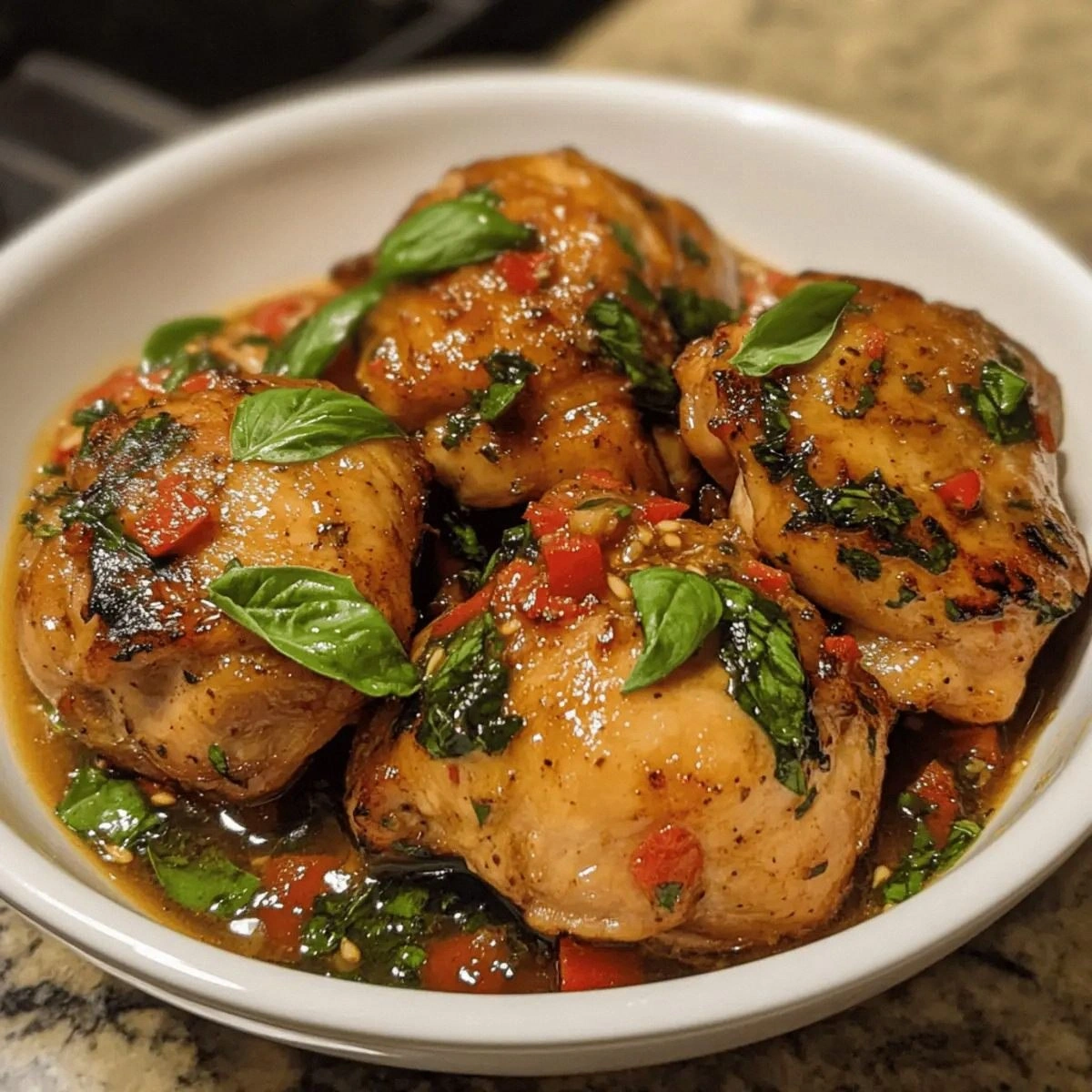
Thai basil is the crown jewel. Its sweet, slightly peppery flavor and fragrant aroma elevate the dish to a whole new level. The basil should be added at the very end to preserve its delicate leaves and bright scent. If you can’t find Thai basil, sweet basil or mint can serve as a close substitute, though the flavor will shift slightly. The jasmine rice serves as a neutral canvas that soaks up the sauce, while the cucumber slice offers a refreshing bite.
Everything's prepped? Good. Let's get into the real action...
The Method — Step by Step
- Heat a large skillet over medium‑high heat and add the vegetable oil. When the oil shimmers, add the chicken thighs skin‑side down. Let them sear for 5–6 minutes until the skin is crisp and golden. Flip and cook the other side for 4–5 minutes until the chicken is almost cooked through. This is the moment of truth; the chicken should emit a toasty aroma.
- Remove the chicken from the pan and set aside. In the same pan, add minced garlic and sliced chilies. Sauté for 30 seconds until fragrant, being careful not to burn the garlic. The garlic should turn a golden hue, signaling that it’s ready.
- Pour in the soy sauce, oyster sauce, fish sauce, and sprinkle the sugar. Stir vigorously to dissolve the sugar and combine the liquids. The sauce should thicken slightly and take on a glossy sheen. This step is crucial; the sauce’s thickness determines how well it clings to the chicken.
- Return the chicken to the skillet, skin side up, and nestle it into the sauce. Reduce the heat to medium and let it simmer for 3–4 minutes, allowing the flavors to meld. Watch the edges; they should start pulling away from the pan, indicating caramelization.
- Add the Thai basil leaves to the pan, tossing them into the sauce. The basil should wilt almost instantly, releasing its aroma. This is the final flourish; the basil’s bright scent will elevate the dish instantly.
- Slide the cooked chicken onto a serving platter. Spoon the remaining sauce over the top and garnish with sliced cucumber for that fresh crunch. The cucumber’s coolness balances the heat and richness of the dish.
- Serve immediately over steamed jasmine rice. The rice soaks up the sauce, creating a harmonious blend of textures and flavors. Each bite should feel like a symphony of sweet, salty, spicy, and herbal notes.
- Optional: Finish with a squeeze of lime juice for a bright citrus lift. The acidity cuts through the richness and adds a refreshing finish.
That’s it— you did it. But hold on, I’ve got a few more tricks that’ll take this to another level. Trust me, the next time you cook this dish, you’ll wonder how you ever made it any other way.
Insider Tricks for Flawless Results
The Temperature Rule Nobody Follows
Cooking the chicken at the right temperature is key. Start high to get a crisp skin, then lower the heat to avoid overcooking. A quick test: press the skin with your finger; it should feel firm but still give slightly. If it feels mushy, the heat was too low.
Why Your Nose Knows Best
The aroma of the sauce is a reliable indicator of readiness. When the sauce smells toasty and slightly caramelized, it’s time to add the basil. Trust your nose; it’s the most accurate sense in the kitchen.
The 5-Minute Rest That Changes Everything
After cooking, let the chicken rest for 5 minutes. This allows the juices to redistribute, ensuring each bite stays juicy. A common mistake is cutting into the chicken immediately, which results in dry meat.
Balancing Sweet and Salty
If you prefer a sweeter sauce, add a teaspoon of honey or brown sugar. Conversely, for a saltier profile, increase the soy sauce by a tablespoon. Small adjustments can dramatically shift the flavor.
Using Fresh Chilies vs. Powder
Fresh chilies give a bright, clean heat, whereas chili powder can introduce a smoky undertone. For an authentic Thai flavor, stick to fresh chilies and remove the seeds if you’re sensitive to heat.
Creative Twists and Variations
This recipe is a playground. Here are some of my favorite ways to switch things up:
Spicy Shrimp Version
Swap the chicken for shrimp. Sauté the shrimp with the garlic and chilies, then add the sauce as usual. The shrimp cooks in 2–3 minutes, giving a different texture but the same flavor profile.
Tofu and Veggie Delight
Use firm tofu cubes and add sliced bell peppers and snow peas. The tofu absorbs the sauce beautifully, while the veggies add crunch and color.
Lemon Basil Twist
Add a tablespoon of fresh lemon juice after removing the chicken from the pan. The acidity brightens the dish and balances the sweetness of the sauce.
Coconut Curry Variation
Replace half of the water in the sauce with coconut milk for a creamy, tropical version. The coconut milk pairs well with the basil and chilies.
Mint & Lime Freshness
If you’re craving a cooler flavor, use fresh mint instead of basil and finish with a splash of lime juice. The mint offers a slightly sweet note that complements the chilies.
Rice Bowl Upgrade
Serve the dish over cauliflower rice or quinoa for a low‑carb alternative. The grains absorb the sauce just as well, making every bite delicious.
Storing and Bringing It Back to Life
Fridge Storage
Store leftover chicken and sauce separately in airtight containers. Keep the chicken in the fridge for up to 3 days and the sauce for up to 4 days. Reheat the chicken in a skillet with a splash of water to prevent drying.
Freezer Friendly
Freeze the cooked chicken and sauce separately in freezer‑safe bags. Thaw overnight in the fridge, then reheat in a skillet or microwave. Add a teaspoon of water before reheating to keep the sauce moist.
Best Reheating Method
Reheat the dish over medium heat, stirring occasionally. The key is to warm it just enough to restore the sauce’s viscosity without overcooking the chicken. A quick splash of water or broth helps revive the sauce’s silky texture.