Picture this: I’m standing in my kitchen, a half‑ripe peach in one hand, a handful of blueberries in the other, and a rogue drizzle of olive oil splattering the countertop like a tiny fireworks show. The scent of fresh greens mingles with the sweet perfume of summer fruit, while the faint tang of lemon cuts through the air like a bright sax solo in a lazy jazz club. I’d just survived a disastrous attempt at a fruit‑laden pasta—think soggy blueberries and a sauce that tasted like a swamp—so I swore off mixing fruit and greens until I discovered the perfect balance that makes this salad sing. I dared a friend to taste it and not beg for seconds, and let’s just say, I’m still hearing the echo of that challenge every time I hear a fork clink against a bowl.
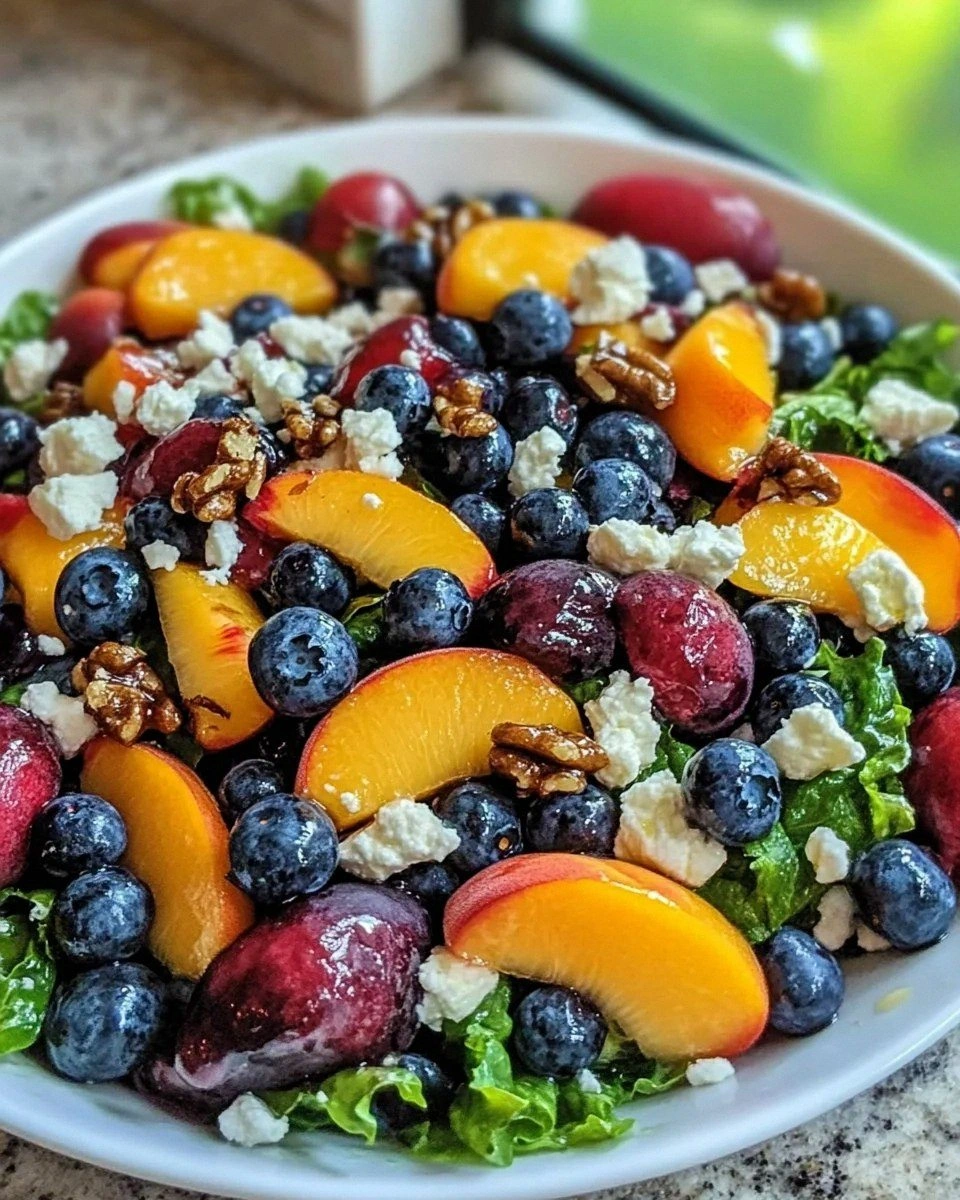
What sets this version apart is not just the ingredients, but the chemistry that happens when they meet. The blueberries bring a burst of juiciness that’s almost cinematic, while the peaches add a buttery softness that feels like a summer sunset on a plate. The feta, crumbled just right, offers a salty punch that cuts through the natural sugars, creating a dance of flavors that’s both bold and comforting. And then there’s the dressing—a silky emulsion of olive oil, lemon, honey, and Dijon mustard that clings to each leaf like a whisper, never overwhelming but always present. I’m about to reveal a tiny secret ingredient that most recipes overlook, and trust me, it’s a game‑changer.
Before we dive in, let’s set the stage: you’ll need a spacious bowl, a sharp knife, and a willingness to get a little messy—because the best food always does. If you’ve ever struggled with soggy salads or wilted greens, you’re not alone; I’ve been there, and I’ve got the fix that will keep your greens crisp and your fruit fresh until the very last bite. This isn’t just a side dish; it’s a statement piece that will have guests whispering, “What’s in that?” and then immediately asking for the recipe. I’ll be honest—I ate half the batch before anyone else got a chance to try it, but that’s only because it’s that good.
Alright, ready for the game‑changer? I’m going to walk you through every single step—mixing, tossing, and plating—so that by the end, you’ll wonder how you ever made a salad any other way. Stay with me here — this is worth it.
What Makes This Version Stand Out
There are countless blueberry‑and‑peach salads out there, but most miss the mark on texture, balance, or sheer joy. Below are the reasons this version rises above the rest, each one a small miracle that adds up to a masterpiece.
- Flavor Harmony: The sweet‑tart duet of blueberries and peaches is anchored by salty feta, creating a taste profile that feels both familiar and exciting.
- Textural Contrast: Juicy fruit meets crisp greens and crunchy walnuts, delivering a mouthfeel that’s as varied as a summer playlist.
- Simplicity: Fewer than ten ingredients, all pantry‑friendly, mean you can throw this together in under half an hour.
- Ingredient Quality: Using ripe, fragrant peaches and plump, organic blueberries makes the difference between “good” and “mind‑blowing.”
- Crowd Reaction: Guests often claim it’s a “secret menu” item, and you’ll hear the phrase “I need the recipe!” at least three times.
- Make‑Ahead Potential: The dressing can be prepared ahead of time, allowing the salad to stay fresh and vibrant for a party or lunch prep.
- Visual Appeal: The vibrant colors of red‑purple berries, orange‑gold peaches, and green leaves create a plate that’s Instagram‑ready without trying.
- Health Boost: Packed with antioxidants, healthy fats, and protein from feta, this salad fuels your body while delighting your palate.
Inside the Ingredient List
The Flavor Base
Mixed Salad Greens are the canvas for this masterpiece. I prefer a blend of baby spinach, arugula, and romaine because each brings its own nuance: spinach’s buttery softness, arugula’s peppery bite, and romaine’s crisp crunch. Skipping the mix and using just one green will flatten the flavor spectrum, leaving the salad feeling one‑dimensional. When shopping, look for deep‑green, vibrant leaves without any brown edges; they’ll stay fresh longer and provide that satisfying snap.
Fresh Blueberries are tiny flavor bombs that burst with sweet‑tart juiciness. Their skin is delicate, so a gentle rinse and a quick pat dry are all they need. If you’re out of blueberries, frozen ones work in a pinch—just thaw them and pat them dry to avoid excess moisture. The antioxidants in blueberries also add a health punch that rivals any superfood trend.
Ripe Peaches bring the sunshine of summer to the plate. The key is to select peaches that yield slightly when pressed—this indicates ripeness without being mushy. Slice them thinly so each bite offers a perfect balance of flesh and juice. If peaches are out of season, try nectarines or even ripe mango for a tropical twist.
The Texture Crew
Crumpled Feta Cheese is the salty anchor that prevents the fruit from turning the salad into a dessert. Its crumbly texture melts into the dressing, creating pockets of creamy richness. If you skip feta, you’ll lose the savory counterpoint, and the salad may taste one‑note sweet. For a milder version, try goat cheese, but be prepared for a slightly different flavor profile.
Walnuts (optional) add a crunchy contrast that’s both satisfying and nutritionally dense. Toast them lightly to bring out their buttery oils; the aroma is a reliable indicator of readiness. If you’re allergic or simply don’t like walnuts, try toasted almonds or pumpkin seeds for a similar crunch.
Olive Oil is the backbone of the dressing, providing richness and helping the lemon juice emulsify. Use a good‑quality extra‑virgin olive oil—you’ll taste the difference instantly. A cheaper oil will make the dressing feel greasy and flat, undermining the salad’s elegance.
The Final Flourish
Lemon Juice brings brightness that lifts the entire dish, cutting through the sweetness of the fruit and the richness of the feta. Freshly squeezed juice is non‑negotiable; bottled lemon juice lacks the lively acidity needed for balance. A good rule of thumb: the juice of one medium lemon yields about two tablespoons.
Honey adds a subtle floral sweetness that harmonizes the acidity and salt, creating a rounded flavor. Use raw honey for a more complex profile; it also adds a glossy sheen to the dressing. If you’re avoiding sugar, a drizzle of maple syrup works as a natural alternative.
Dijon Mustard provides a gentle tang and acts as an emulsifier, ensuring the oil and lemon juice blend into a silky coating. A teaspoon is enough; too much will dominate the palate. For a milder mustard flavor, swap with whole‑grain mustard, but keep the quantity the same.
Salt and Pepper, the humble finishers, enhance every component. Season the greens lightly before adding the dressing, and finish the salad with a pinch of flaky sea salt for texture. If you neglect this step, the flavors will feel muted, no matter how premium the ingredients.
Everything's prepped? Good. Let's get into the real action...
The Method — Step by Step
Start by giving your mixed salad greens a gentle rinse under cold water, then spin them dry in a salad spinner. The leaves should be almost bone‑dry; any excess moisture will dilute the dressing later. Transfer the greens to a large, shallow bowl—this allows you to toss without crushing. As you do this, take a moment to admire the vivid green carpet you’ve created; it’s the stage for the upcoming flavor fireworks.
While the greens settle, rinse the blueberries in a colander, then pat them dry with a clean kitchen towel. Place them in a small bowl and set aside. Their skins are delicate, so handle them gently to avoid bruising. The moment you see those deep‑blue spheres glisten, you’ll know the salad is already on its way to greatness.
Next, slice the ripe peaches. Cut each peach in half, remove the pit, and then slice into thin wedges—about a quarter‑inch thick. If the skin is a bit tough, you can peel it, but leaving it on adds a pleasant bite and extra nutrients. Toss the peach slices into the bowl with the greens, spreading them evenly so each forkful gets a piece of sunshine.
Now it’s time to toast the walnuts (if you’re using them). Heat a dry skillet over medium heat, add the walnuts, and stir constantly for 3‑4 minutes. You’ll hear a gentle crackle, and the nuts will turn a golden‑brown hue, releasing a nutty perfume that fills the kitchen. Remove from heat and let them cool; this prevents them from becoming soggy when mixed later.
Prepare the dressing while the nuts cool. In a small bowl, whisk together 3 tablespoons of extra‑virgin olive oil, 2 tablespoons of freshly squeezed lemon juice, 1 tablespoon of honey, and 1 teaspoon of Dijon mustard. As you whisk, you’ll notice the mixture thickening into a glossy emulsion—this is the magic that will coat every leaf and fruit piece. Season with a pinch of sea salt and freshly cracked black pepper, then taste and adjust if needed.
Now comes the assembly. Drizzle half of the dressing over the greens, blueberries, and peach slices, then gently toss with clean hands or two large spoons. The goal is to coat everything lightly without bruising the fruit; think of it as a delicate waltz rather than a wrestling match. Once the first half is evenly dressed, add the crumbled feta and toasted walnuts, then give a final gentle toss.
Finish the salad by drizzling the remaining dressing in a thin stream over the top, creating a shimmering finish that catches the light. Sprinkle a final pinch of flaky sea salt for texture, and if you love a bit of extra zing, add a few extra lemon zest shavings. Step back, admire the colorful mosaic, and inhale the mingling aromas of citrus, fruit, and toasted nuts.
Serve immediately on a wide platter or in individual shallow bowls. The salad is best enjoyed at room temperature, allowing the flavors to meld and the feta to soften just slightly. If you’re preparing ahead, keep the dressing separate and combine no more than 30 minutes before serving to preserve the crispness of the greens.
That's it — you did it. But hold on, I've got a few more tricks that'll take this to another level...
Insider Tricks for Flawless Results
The Temperature Rule Nobody Follows
Always let your dressing sit at room temperature for five minutes before mixing it into the salad. Cold oil can cause the vinaigrette to separate, leading to a watery finish that wilts the greens. By letting it warm slightly, the emulsification stays stable, and the dressing clings to the leaves like a silk scarf. I once tried a chilled dressing and ended up with soggy spinach—lesson learned.
Why Your Nose Knows Best
Before you add the lemon juice, give it a quick sniff. If the aroma is sharp and bright, the juice is fresh; if it smells flat, the lemon is past its prime and will introduce a dull acidity. Trusting your nose saves you from a bland salad that could have been vibrant. This tiny sensory check is a habit that even seasoned chefs swear by.
The 5‑Minute Rest That Changes Everything
After tossing the salad, let it rest for exactly five minutes before serving. This pause allows the flavors to marry, the feta to soften just a touch, and the walnuts to release their oils into the dressing. The result is a harmonious bite where every component sings in unison. Skipping this step is like cutting a movie before the climax—you miss the payoff.
Walnut Toasting Precision
Use a silicone spatula to keep the walnuts moving in the pan; this prevents hot spots and ensures an even golden color. The moment you see a faint caramel scent, pull them off the heat immediately—they’ll continue cooking from residual heat. Over‑toasting is the silent killer of many salads; it introduces bitterness that masks the fruit’s sweetness.
Salt Timing Mastery
Season the greens lightly before adding any dressing, then finish with a pinch of flaky sea salt after tossing. This two‑stage salting ensures the leaves are seasoned throughout, not just on the surface. If you only add salt at the end, the dressing may become too salty, and the greens will stay bland.
Creative Twists and Variations
This recipe is a playground. Here are some of my favorite ways to switch things up:
Berry‑Boosted Version
Swap half of the blueberries for fresh raspberries or blackberries. The extra tartness adds depth, and the darker hue makes the plate look even more dramatic. Perfect for a brunch where you want a touch of elegance.
Herb‑Infused Delight
Fold in a handful of chopped fresh mint or basil just before serving. The herbaceous notes lift the fruit’s sweetness and add a fragrant finish that’s perfect for outdoor picnics. My friend tried mint once and declared it “summer in a bowl.”
Protein‑Packed Power
Add grilled chicken breast strips or a scoop of quinoa to turn this side into a complete meal. The added protein makes it suitable for a post‑workout lunch, and the savory element balances the fruit’s natural sugar.
Spicy Surprise
Mix in a pinch of crushed red pepper flakes into the dressing for a subtle heat that awakens the palate. The spice pairs surprisingly well with the sweet fruit, creating a sweet‑heat contrast that’s addictive.
Cheese Switcheroo
Replace feta with crumbled goat cheese or a shave of aged Parmesan for a different salty profile. Goat cheese adds a creamy tang, while Parmesan contributes a nutty umami that deepens the flavor.
Storing and Bringing It Back to Life
Fridge Storage
Keep the salad components separate: store the greens, fruit, and nuts in airtight containers, and keep the dressing in a small jar. When you’re ready to eat, combine everything and give a quick toss. This method preserves crispness for up to 24 hours.
Freezer Friendly
While the salad itself isn’t ideal for freezing, you can freeze the dressing. Blend the olive oil, lemon juice, honey, and mustard, then pour into an ice‑cube tray. Once frozen, transfer the cubes to a zip‑top bag; they’ll last for three months and melt quickly when needed.
Best Reheating Method
If you’ve pre‑tossed the salad and need to revive it, drizzle a tiny splash of water over the bowl and give it a gentle toss. The moisture creates a light steam that revives wilted greens without making them soggy. Avoid microwaving; the heat will melt the feta and ruin the fruit’s texture.