Picture this: a rainy afternoon, the kitchen lights flickering, and the aroma of sautéed mushrooms drifting through the air. I was standing on a shaky countertop, flipping a skillet that had just exploded with garlic, and the only thing left was a pot of watery polenta that seemed doomed to mediocrity. I dared myself to turn that bland base into something that would make my taste buds do the tango. The result was a silky, nutty canvas that embraced every splash of cream and wine, turning a simple comfort dish into a revelation. By the end of this post, you'll know how to elevate polenta from ordinary to unforgettable.
First, let me admit I once tried a recipe that promised creamy polenta but delivered a rubbery, chalky mess. The culprit? A rushed simmer that left the grains undercooked and the liquid evaporating too quickly. This version, however, takes the time to coax the starch out gently, creating a velvety texture that clings to the fork like a warm hug. The mushrooms bring earthy depth, while the splash of white wine adds a bright, almost citrusy lift. Trust me, that first bite will make you question every other polenta you've ever tasted.
Another game changer is the use of heavy cream, which thickens the mixture without overpowering the subtle corn flavor. The thyme sprigs infuse a fragrant herbal note that lingers long after the last spoonful. I dare you to taste this and not go back for seconds; the richness is balanced, not heavy. Most recipes get this completely wrong, tossing in too much salt or using instant polenta that loses texture. The secret lies in slow, patient simmering, which I’ll walk you through step by step.
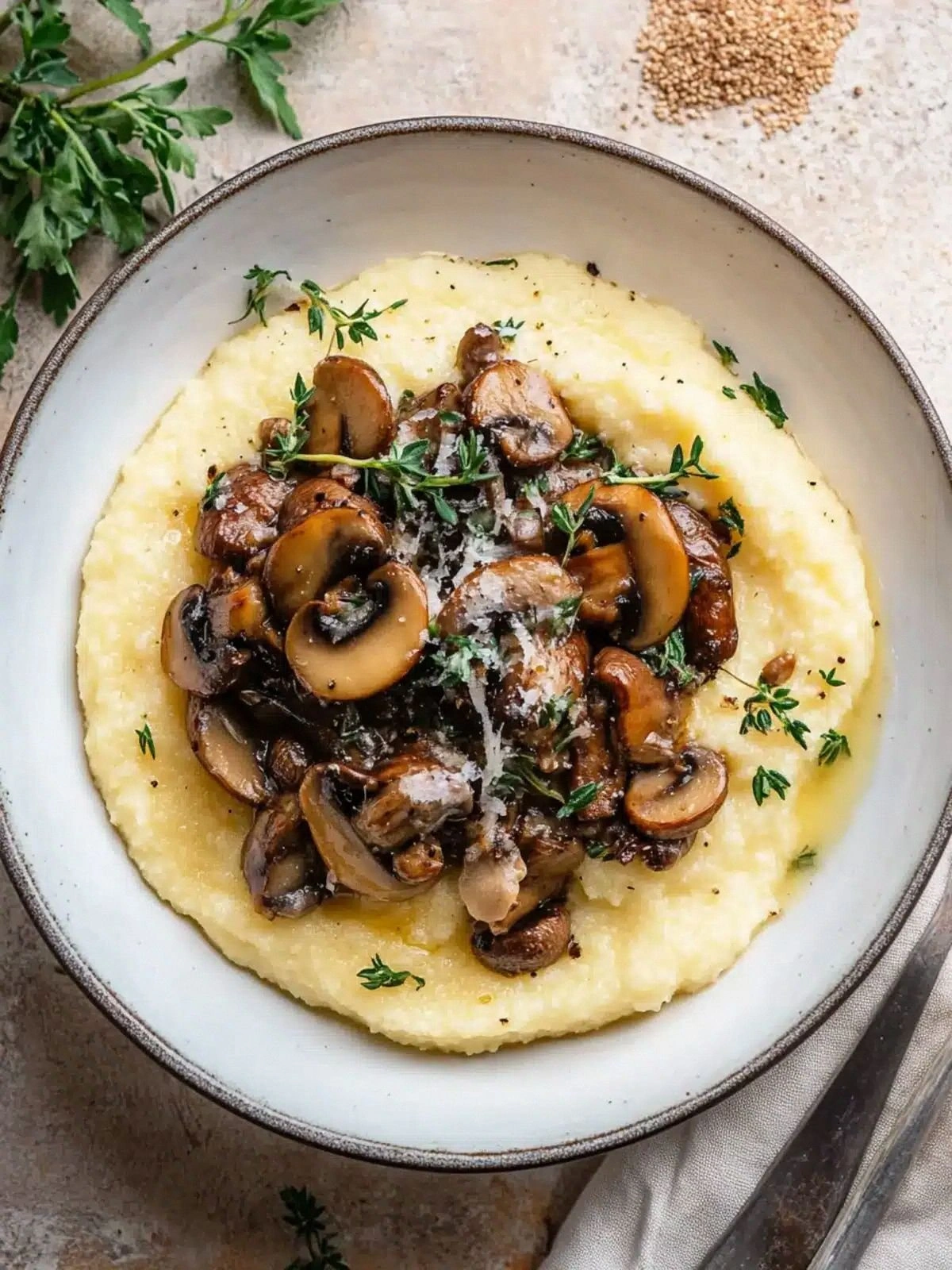
Picture yourself pulling this out of the pot, steam curling like wisps of cloud, the aroma of garlic and mushroom dancing in the air. The surface should gleam with a glossy sheen, and the first spoon should release a burst of savory cream. This is hands down the best version you'll ever make at home because it marries simplicity with depth. If you've ever struggled with making polenta creamy, you're not alone — and I've got the fix. Let me walk you through every single step — by the end, you'll wonder how you ever made it any other way.
Now that the anticipation is at its peak, let’s dive deeper into the magic that turns a humble grain into a decadent bowl of comfort. I’ve spent nights experimenting, tweaking ratios, and even testing different mushroom varieties to find the perfect balance. The result? A dish that feels like a hug from the inside out, with each bite unfolding layers of flavor that keep you coming back. I’ve distilled the process into clear, actionable steps, so you can recreate this at home without a single hiccup. And trust me, you’ll be proud to show off your culinary prowess to friends and family.
What Makes This Version Stand Out
- Flavor Depth: The combination of garlic, thyme, and a splash of white wine creates a savory backbone that elevates the corn’s natural sweetness. Each ingredient is cooked just long enough to release its essence without losing brightness.
- Texture Mastery: Slow simmering allows the starch to swell and thicken, resulting in a creamy consistency that clings to the spoon rather than sliding off. The result is a silky, almost custard-like mouthfeel.
- Simplicity of Prep: With only nine ingredients and a straightforward method, this dish is approachable for beginners yet sophisticated enough for seasoned cooks. No fancy equipment or obscure techniques required.
- Crowd Appeal: Guests rave about the comforting yet elegant nature of this dish. It’s a perfect centerpiece for casual gatherings or a comforting weeknight dinner.
- Ingredient Quality: Using fresh, high‑quality mushrooms and organic olive oil ensures each bite is packed with natural flavors. The choice of heavy cream adds richness without artificial additives.
- Cooking Method: The step‑by‑step approach minimizes guesswork, allowing you to monitor consistency and flavor development in real time.
- Make‑Ahead Potential: Once cooked, the polenta can be cooled, sliced, and reheated without losing texture, making it ideal for meal prep or entertaining.
Alright, let's break down exactly what goes into this masterpiece…
Inside the Ingredient List
The Flavor Base
Garlic: Fresh cloves provide a pungent, aromatic foundation that permeates the entire dish. When sautéed, they release a sweet, mellow aroma that sets the stage for the mushrooms. Skipping garlic would leave the flavor profile flat and unremarkable. For a milder taste, try using a small amount of garlic powder instead of fresh.
Olive oil: A drizzle of high‑quality extra‑virgin olive oil adds a subtle fruity note and helps sauté the aromatics without burning. It also serves as a medium for the garlic’s flavors to bloom. If you’re watching calories, a teaspoon of oil will still suffice, but the texture may feel slightly drier.
White wine: A half‑cup of crisp white wine deglazes the pan, pulling caramelized bits from the bottom and adding a bright, acidic counterpoint to the richness of the cream. It also helps dissolve the starch in the polenta, ensuring a smoother consistency. If you prefer a non‑alcoholic version, replace the wine with an equal amount of vegetable broth and a splash of lemon juice.
Fresh thyme: Two sprigs of thyme infuse the dish with a subtle, earthy aroma that pairs beautifully with mushrooms. The leaves release their flavor slowly, allowing the thyme to permeate the entire pot. If fresh thyme is unavailable, dried thyme works but use only half the amount.
Salt & Pepper: Seasoning to taste is crucial; over‑salting can mask the delicate flavors, while under‑seasoning leaves the dish bland. Start with a pinch of salt, taste, and adjust as needed. Pepper adds a gentle heat that balances the cream’s richness.
The Texture Crew
Polenta: This cornmeal base provides a hearty, slightly chewy texture that absorbs the savory liquids. Choosing a medium‑coarse polenta ensures a pleasant bite, while instant polenta may result in a mushy consistency. If you prefer a smoother texture, grind the polenta finer before cooking.
Vegetable broth: Four cups of broth create the liquid base that the polenta cooks in. A good broth adds depth and prevents the dish from tasting bland. For a richer flavor, use a homemade broth or one seasoned with herbs.
Heavy cream: The heavy cream thickens the mixture, giving it a luxurious mouthfeel without turning it into a sauce. It also balances the acidity from the wine and the earthiness of the mushrooms. If you’re looking for a lighter version, replace half the cream with whole milk.
The Unexpected Star
Mixed mushrooms: Eight ounces of assorted mushrooms—such as cremini, shiitake, and button—add umami, texture, and a forest‑like aroma that elevates the dish. Their natural sugars caramelize when sautéed, creating a subtle sweetness that complements the corn. If you’re a fan of a single variety, porcini or oyster mushrooms can also be used, but adjust the quantity to avoid overpowering the polenta.
Everything's prepped? Good. Let's get into the real action…
The Method — Step by Step
- Begin by heating a large saucepan over medium heat, adding the olive oil until it shimmers. Toss in the minced garlic and sauté until fragrant, about 30 seconds; the scent should lift your spirits. Be careful not to let the garlic brown, as that will introduce bitterness. This is the moment of truth, where aroma sets the foundation. Keep the heat steady so the garlic releases its full flavor without burning.
- Add the fresh thyme sprigs, letting them infuse the oil and garlic. The leaves will wilt slightly, releasing their herbal essence. Stir gently to distribute the thyme evenly. This step adds a fragrant layer that will mingle with the mushrooms later. The aroma should feel like a warm forest breeze.
- Introduce the mixed mushrooms, spreading them out in a single layer. Sauté until they begin to brown, about 5–7 minutes, stirring occasionally. The mushrooms should develop a golden crust and release their juices. The color change signals caramelization, which enhances sweetness. Watch the pan closely; the mushrooms can go from golden to burnt in a moment.
- Pour in the white wine, letting it simmer until reduced by half. The reduction concentrates the flavor and evaporates excess liquid. While it simmers, stir frequently to prevent the wine from sticking to the pan. The wine should leave a faint, fragrant steam that signals readiness. This reduction step is key to balancing the richness of the cream.
- Stir in the vegetable broth, bringing the mixture to a gentle boil. As it simmers, slowly whisk in the polenta in a steady stream. The polenta should be added gradually to avoid clumping. Once all the polenta is incorporated, lower the heat and let it thicken. The consistency should be thick enough to coat the back of a spoon.
- Add the heavy cream, swirling it into the pot. The cream should swirl in smoothly, creating a glossy sheen. Let the mixture simmer for an additional 5 minutes, stirring occasionally. This final simmer allows the flavors to meld into a cohesive, velvety sauce. The dish should smell like a warm kitchen on a rainy day.
- Season with salt and pepper to taste, stirring gently. Taste the mixture; adjust seasoning as needed. The final dish should have a balanced flavor profile, with the earthiness of the mushrooms and the richness of the cream harmonizing. Remove the thyme sprigs before serving. Plate the polenta in shallow bowls, letting the glossy surface gleam.
- Serve immediately, garnishing with fresh parsley or a drizzle of truffle oil if desired. The steam rising from the bowl should carry the scent of garlic and mushrooms, inviting you to dig in. This is pure magic; every spoonful feels like a warm hug. If you’re feeling adventurous, top with grated parmesan for an extra layer of umami. And now the fun part: enjoy and celebrate the culinary triumph.
That's it — you did it. But hold on, I've got a few more tricks that'll take this to another level. Each tip below will help you refine the dish and avoid common pitfalls.
Insider Tricks for Flawless Results
The Temperature Rule Nobody Follows
Maintaining a consistent low simmer is crucial for achieving the perfect polenta texture. If the heat is too high, the polenta will scorch at the bottom; if too low, it will take longer to thicken. Use a thermometer to keep the temperature between 180°F and 190°F. This ensures even cooking and prevents the dreaded “stuck on the pan” moment.
Why Your Nose Knows Best
Smell is a powerful cue for seasoning. Before adding salt, sniff the mixture to gauge its current flavor profile. If it smells slightly flat, it’s time to season. A well‑seasoned polenta will have a fragrant, savory aroma that invites you to taste.
The 5-Minute Rest That Changes Everything
Once the polenta is removed from heat, let it rest for five minutes. This brief pause allows the starches to settle, resulting in a firmer, more cohesive texture. The rest also lets the flavors meld, making each bite more harmonious.
Stirring Technique Matters
Stirring constantly during the first 10 minutes prevents clumping and ensures even thickening. Use a wooden spoon or silicone spatula; metal can react with acidic wine and alter the flavor. Keep the motion smooth and steady.
Use a Wide Pan for Even Cooking
A wide, shallow pan distributes heat more evenly, reducing the risk of scorching. It also allows the liquid to evaporate at a controlled rate, ensuring the polenta thickens properly.
Finishing Touches: The Fresh Herb Boost
Adding fresh herbs right before serving brightens the dish and adds a burst of color. A sprinkle of chopped parsley or a few thyme leaves can elevate the visual appeal and aroma. Avoid adding herbs too early, as they may lose their bright flavor during simmering.
Creative Twists and Variations
This recipe is a playground. Here are some of my favorite ways to switch things up:
Cheesy Polenta Delight
Fold in a cup of grated parmesan or gorgonzola at the end of cooking for a rich, savory twist. The cheese melts into the cream, creating a silky, gooey texture. This variation is perfect for a cozy night in.
Spicy Mushroom Kick
Introduce a pinch of crushed red pepper flakes or a splash of hot sauce when sautéing the mushrooms. The heat pairs beautifully with the earthy flavors, adding a lively edge to the dish.
Herb‑Infused Cream
Replace fresh thyme with a handful of fresh basil or oregano. The different herb profiles will shift the aromatic profile, offering a Mediterranean feel.
Vegan Polenta
Swap the heavy cream for coconut milk or cashew cream, and use vegetable broth with a splash of soy sauce. The result is a creamy, plant‑based version that still delivers on flavor.
Polenta with Truffle Oil
Drizzle a teaspoon of truffle oil over the finished dish for an indulgent, earthy aroma. The truffle’s umami will complement the mushrooms and elevate the overall experience.
Polenta with Roasted Vegetables
Stir in roasted cherry tomatoes, bell peppers, or zucchini for added color and nutrition. The roasted veggies bring a sweet, smoky flavor that balances the creaminess.
Storing and Bringing It Back to Life
Fridge Storage
Cool the polenta to room temperature, then transfer it to an airtight container. Store in the refrigerator for up to three days. The polenta will firm up, making it easier to slice and reheat.
Freezer Friendly
Divide the cooled polenta into portions and wrap tightly with plastic wrap before freezing. It can be stored for up to two months. Thaw in the refrigerator overnight before reheating.
Best Reheating Method
Reheat the polenta in a saucepan over low heat, adding a splash of water or broth to restore moisture. Stir until heated through and silky. Avoid microwaving, which can make the polenta rubbery.