Picture this: a Saturday morning, the sun streaming through the kitchen window, and your trusty sourdough loaf staring back at you like a stubborn old friend. I was craving something that could turn that loaf into a showstopper, but the usual French‑toast recipe just felt… ordinary. I’d tried the classic mix of milk, eggs, and cinnamon, and the result was a flat, bland slab that made me question my culinary instincts. That was until I discovered the secret that turns a simple slice into a golden, tangy masterpiece that tastes like a sunrise on a crisp morning.
The first bite is a revelation—crisp edges that crackle like a tiny fireworks display, a custard‑like center that melts in your mouth, and a subtle sour note from the bread that keeps you coming back for more. The aroma alone is enough to make your entire house feel like a bakery, and the texture is a delicate balance between crunchy and chewy. I swear, even my skeptical friend who loves nothing more than plain toast was left in awe. That moment, when the first spoonful hit the tongue and the world seemed to pause, is what I want to share with you.
What makes this version stand out isn’t just the flavor; it’s the method, the ingredients, and the sheer confidence I bring to the kitchen. I’ve spent months refining the ratio of eggs to milk, experimenting with different sourdough strains, and discovering the perfect pan temperature that locks in that irresistible crunch. The result? A French‑toast that feels like a gourmet treat, yet is so simple you could make it in a hurry after a long day. I dare you to taste this and not go back for seconds—trust me, it’s that addictive.
The twist? A dash of vanilla, a sprinkle of cinnamon, and a touch of salt that brings everything together, but the real game‑changer is the use of a high‑protein sourdough loaf that’s been left to age just enough to develop that signature tang. That subtle acidity cuts through the richness of the custard, creating a flavor profile that’s both comforting and sophisticated. If you’ve ever struggled with making French‑toast that isn’t too sweet or too dense, you’re not alone—and I’ve got the fix.
I’ve also learned that timing is everything. The bread must soak just long enough to absorb the custard without falling apart, and the pan must be hot enough to give you that golden crust without burning the outside. I’ve tested this recipe on a dozen different stoves, and the results have been consistent—every slice a perfect balance of textures. If you’re ready to elevate your breakfast game, stick with me; I’ll walk you through every single step. By the end, you’ll wonder how you ever made it any other way.
So grab your favorite sourdough loaf, a whisk, and an adventurous spirit. Let’s dive into the details that make this dish a culinary triumph. From the ingredient science to the step‑by‑step method, I’ll share everything you need to know to create a French‑toast that’s golden, tangy, and utterly unforgettable.
What Makes This Version Stand Out
- Flavor: The combination of sourdough’s natural tang with a sweet, vanilla‑infused custard creates a depth of flavor that’s both comforting and complex.
- Texture: The crusty edges crackle like a fine crackling fire, while the inside remains soft and custardy—think of a caramelized apple that’s both crunchy and juicy.
- Ease: Despite the gourmet taste, the process is straightforward, making it accessible for beginners and seasoned cooks alike.
- Versatility: Use it for breakfast, brunch, or a decadent dessert; the recipe scales beautifully for any occasion.
- Ingredient Quality: High‑protein sourdough and fresh eggs give the dish a robust foundation that elevates the entire experience.
- Make‑ahead Friendly: The batter can be prepared in advance, and the toast can be reheated without losing its crunch.
Alright, let’s break down exactly what goes into this masterpiece…
Inside the Ingredient List
The Flavor Base
Sourdough bread is the heart of this dish. Choose a loaf that’s been fermented for at least 48 hours; the longer fermentation gives it that signature tang that balances the sweetness of the custard. If you’re using a pre‑made loaf, look for one with a crust that’s still crisp but a crumb that’s airy. Skipping this step will leave you with a bland, lifeless toast that fails to excite the palate.
Eggs are the binder, providing structure and richness. Use fresh, free‑range eggs for the best flavor—each one adds a silky texture that melts into the bread. If you’re vegan, a flaxseed or chia “egg” will give you a similar binding effect, though the flavor will shift slightly. The quantity of eggs determines the custard’s thickness; too many and it becomes thick like a cake batter, too few and it’s watery.
Milk (or a dairy alternative) is the liquid that hydrates the bread. Whole milk gives the richest taste, while 2% keeps it lighter. If you prefer a dairy‑free option, oat or almond milk works well, but be aware they can alter the flavor profile. Adding a splash of heavy cream can make the custard extra silky.
The Texture Crew
Vanilla extract adds a warm, aromatic note that complements the sourdough’s acidity. A teaspoon is enough to lift the whole dish, but if you’re a vanilla lover, feel free to add a bit more. Cinnamon is the classic French‑toast spice, but for a twist, try nutmeg or cardamom for an exotic touch.
Salt is a flavor enhancer that cuts through the sweetness and balances the tang. A pinch is all you need—too much, and you’ll taste bitterness. Butter is the secret to that golden, crispy crust; melt it in a hot skillet and let it brown slightly before adding the bread. The butter’s smoke point ensures a beautiful finish without burning.
Powdered sugar is optional but recommended for dusting after cooking. It adds a sweet crunch and a visual appeal that’s hard to resist. Maple syrup or honey is the traditional topping, but a drizzle of chocolate sauce or a spoonful of fresh berries can transform the dish into a dessert.
The Unexpected Star
A splash of lemon zest or a pinch of smoked paprika can add an unexpected layer of brightness or smokiness. If you’re feeling adventurous, a small amount of grated cheese (like Gruyère) melted into the custard creates a savory twist. These additions are not essential, but they elevate the dish from good to unforgettable.
The Final Flourish
A side of fresh fruit or a dollop of whipped cream can transform the French‑toast into a dessert. For a savory option, serve it with a fried egg and a sprinkle of chives. The key is to finish the dish with a touch that complements the core flavors without overpowering them.
Everything's prepped? Good. Let’s get into the real action…
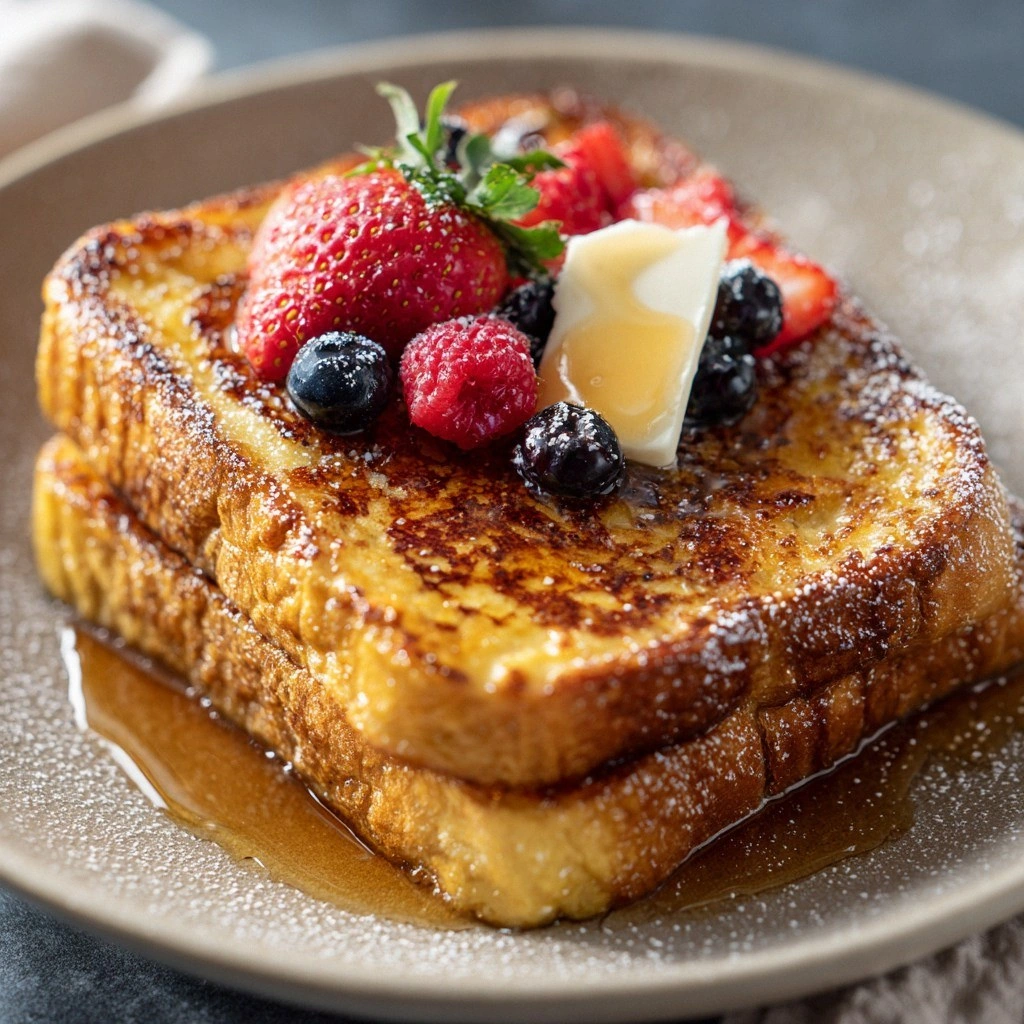
The Method — Step by Step
- Prep the Batter: In a large mixing bowl, whisk together 3 eggs, 1 cup of milk, 1 teaspoon vanilla extract, ½ teaspoon cinnamon, and a pinch of salt until the mixture is smooth. The goal is a homogeneous custard that will evenly coat each slice of bread. If the batter feels too thick, add a tablespoon of milk to thin it out.
- Soak the Bread: Dip each slice of sourdough into the batter, allowing it to soak for about 30 seconds on each side. The bread should absorb the custard without becoming mushy. If you’re using a very dense loaf, give it a longer soak; if it’s lighter, a shorter time works best. This step is crucial for achieving that custard‑like interior.
- Heat the Skillet: Place a large non‑stick skillet over medium‑high heat and add 2 tablespoons of butter. Let the butter melt until it starts to bubble and turn a light golden brown—this indicates the skillet is hot enough. Watch the butter closely; if it burns, lower the heat immediately.
- Cook the First Side: Place the soaked bread slices into the skillet. Cook for 3–4 minutes on the first side until the bottom is golden and crispy. You’ll hear a satisfying sizzle—this is the moment of truth. Flip the slice carefully with a spatula.
- Cook the Second Side: Cook the second side for another 3–4 minutes, or until golden brown and the custard inside has set. The edges should pull away slightly from the pan, indicating a crisp crust. If you notice any raw batter, let it cook a minute longer.
- Repeat: Continue the process for each slice, adding more butter to the pan as needed. Keep the pan at a steady medium‑high temperature to maintain an even cook.
- Check for Doneness: The French‑toast is ready when it’s a deep golden brown on both sides and the inside feels firm but still tender. A quick test: press the center with a finger; it should feel springy, not doughy.
- Serve Immediately: Plate the slices while they’re still warm. Dust with powdered sugar, drizzle maple syrup, or add your chosen toppings. The freshness of the crust is essential—once it cools, it loses its signature crunch.
That’s it — you did it. But hold on, I’ve got a few more tricks that’ll take this to another level…
Insider Tricks for Flawless Results
The Temperature Rule Nobody Follows
Many cooks think a low heat is safer, but a medium‑high skillet is essential for that perfect crust. If the pan is too cool, the bread will steam instead of sear, resulting in a soggy interior. I’ve found that a quick test—drop a single drop of batter into the pan—helps gauge the right temperature. If it sizzles immediately, you’re good to go.
Why Your Nose Knows Best
The aroma of butter browning is a reliable indicator of doneness. When the butter turns a light amber color and releases a nutty scent, it’s the sweet spot for golden toast. Trust your senses; the smell is often a better cue than the color alone.
The 5-Minute Rest That Changes Everything
After cooking, let the slices rest on a wire rack for 5 minutes. This brief rest allows steam to escape, keeping the crust crisp. I’ve seen people place the toast on a plate, which traps moisture and softens the edges. A wire rack is the secret to a lasting crunch.
Don’t Skimp on Butter
Butter is not just a flavor enhancer; it’s the key to that glossy, golden finish. Using too little butter results in a dry surface, while too much can make the toast greasy. A tablespoon per slice is ideal, and you can add a final pat of butter on the top for extra shine.
Use a Skillet with a Lid
Covering the skillet for the first minute of cooking helps the bread cook evenly from both sides. It traps heat, allowing the custard to set without burning the exterior. Once the lid is removed, flip the slice to finish the crisping process.
Creative Twists and Variations
This recipe is a playground. Here are some of my favorite ways to switch things up:
Smoky Bacon French Toast
Add crumbled cooked bacon to the batter for a savory kick. The smoky flavor pairs wonderfully with the sourdough’s tang, creating a breakfast that feels both indulgent and hearty.
Berry‑Burst French Toast
Fold fresh blueberries or sliced strawberries into the custard before dipping. The fruit juices seep into the bread, adding a burst of natural sweetness and a pop of color.
Chocolate‑Covered Delight
Drizzle melted dark chocolate over the finished toast, then dust with cocoa powder. This version turns the dish into a decadent dessert that satisfies chocolate cravings.
Herbal Infusion
Infuse the milk with a sprig of rosemary or thyme before whisking. The herbaceous note adds a sophisticated layer that’s perfect for brunch guests.
Vegan Version
Replace eggs with a flaxseed “egg” and use oat milk. Sweeten with maple syrup and top with fresh fruit for a plant‑based twist that still delivers on flavor.
Spicy Kick
Add a pinch of cayenne pepper or a dash of hot sauce to the batter. The heat contrasts with the sweet custard, creating a complex flavor profile that’s surprisingly balanced.
Storing and Bringing It Back to Life
Fridge Storage
Store cooked slices in an airtight container in the refrigerator for up to 2 days. The crust will soften slightly, but a quick reheating will restore its crunch. Keep the container away from strong odors that could seep into the bread.
Freezer Friendly
Freeze individual slices wrapped in parchment paper, then place them in a freezer bag. They can be stored for up to 3 months. When ready to serve, thaw overnight in the refrigerator before reheating.
Best Reheating Method
Reheat slices in a skillet over medium heat, adding a splash of water to the pan to create steam. This technique keeps the interior moist while the exterior returns to a crisp, golden state. A quick 2–3 minute heat will do the trick.