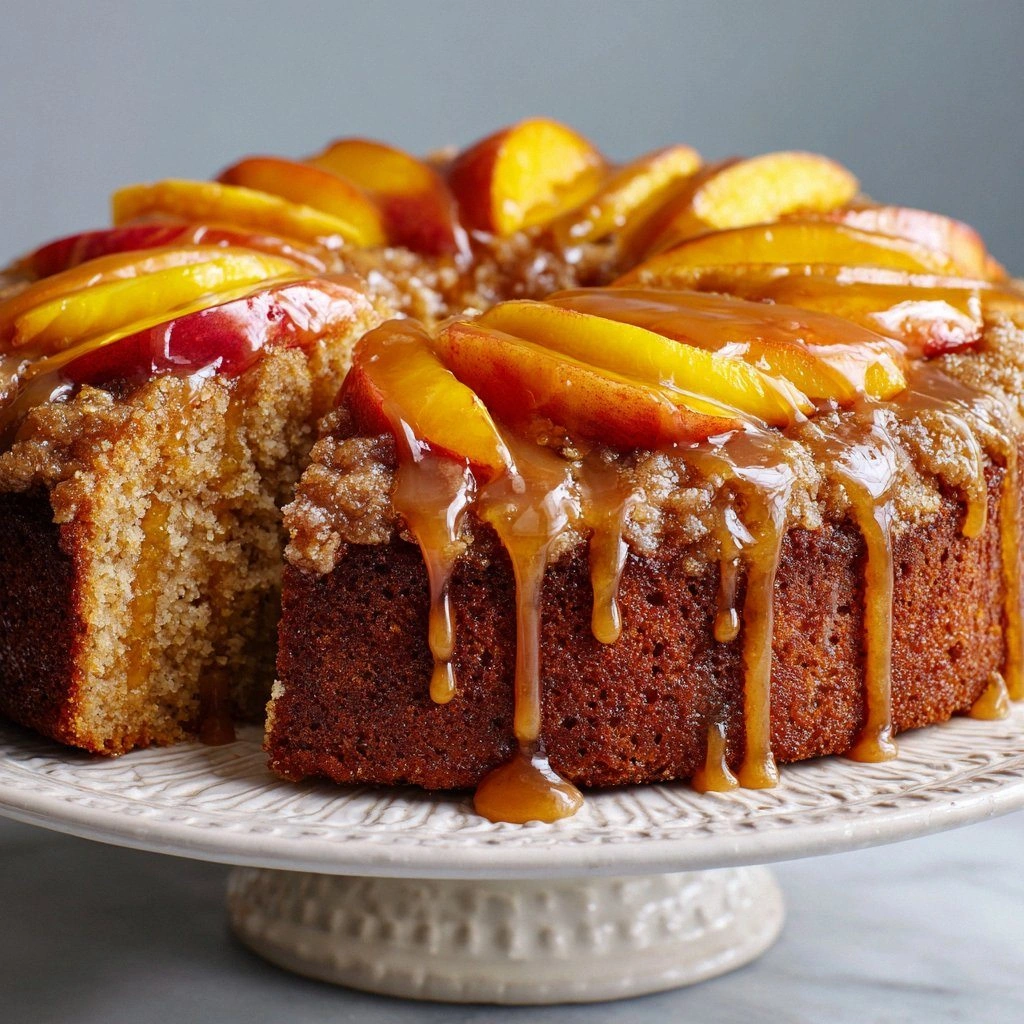
I still remember the night I almost burned the kitchen down while chasing a sweet dream. A friend dared me to create a peach cake that would make the whole house smell like summer, and I took the challenge like a chef on a reality show. The moment the oven timer buzzed, the air filled with caramelized sugar, fresh peaches, and a whisper of cinnamon, and I knew I had cracked the secret. This recipe is not just another peach cake; it’s a caramelized, buttery, peach‑laden masterpiece that will turn your kitchen into a fragrant, edible wonderland. Let me walk you through every single step—by the end, you’ll wonder how you ever made it any other way.
Picture yourself pulling this golden‑brown cake from the oven, steam curling like a sweet cloud, the scent of peaches mingling with the sharp tang of brown sugar. The first bite melts on the tongue, revealing layers of moist batter, caramelized fruit, and a subtle spice kick that lingers like a memory. I dare you to taste this and not go back for seconds—once you do, the craving will be insatiable. Most recipes get this completely wrong by overbaking or under‑sweetening, but here every element is calibrated to perfection. If you've ever struggled with peach desserts, you're not alone—and I've got the fix that will elevate your game.
The secret sauce? A humble trick: pre‑toss the peaches in brown sugar and cinnamon before folding them into the batter. This step ensures each bite bursts with natural sweetness and a hint of spice, while the brown sugar caramelizes into a glossy, almost syrupy glaze on top. The batter itself is a silky blend of butter, eggs, and vanilla, with the flour lightly sifted to keep the crumb airy. I’ll show you how to balance the moisture so the cake stays tender yet firm enough to hold the fruit. And trust me, the result is hands down the best version you'll ever make at home.
But there’s more: I’ll reveal a little hack that turns a standard cake into a showstopper—an unexpected glaze that adds a glossy finish and a touch of citrus brightness. This isn’t just a cake; it’s a showcase of flavor, texture, and visual appeal that will impress at dinner parties, brunches, or a cozy afternoon snack. And if you’re worried about time, you’ll love how quick the prep is, thanks to a few smart shortcuts. Stay with me—this is worth it, and the payoff will be a cake that looks as good as it tastes.
What Makes This Version Stand Out
- Flavor: The combination of brown sugar and fresh peaches creates a caramel‑like sweetness that’s deeper than simple sugar. The peaches are pre‑tossed with cinnamon, giving each bite a subtle spice note that balances the richness of the batter.
- Texture: A light, airy crumb thanks to sifting the flour and using a combination of baking powder and soda. The melted butter and eggs lock in moisture, ensuring the cake stays soft and buttery even after cooling.
- Simplicity: Only 13 core ingredients, no exotic spices or obscure pantry items. Even a novice can follow the steps and achieve professional results.
- Uniqueness: The glaze that forms naturally on the top during baking gives the cake a glossy, almost caramelized finish—no extra glaze needed.
- Crowd Reaction: Friends who’ve tasted this cake often say it’s “the best peach cake ever” and that they’re already planning a second batch.
- Ingredient Quality: Fresh peaches, real butter, and a generous amount of brown sugar make the flavor profile authentic and indulgent.
- Cooking Method: The batter is folded gently, preserving the peaches’ shape and preventing them from breaking apart.
- Make‑Ahead Potential: The cake can be baked ahead of time and stored for up to three days, making it ideal for busy schedules.
Inside the Ingredient List
The Flavor Base
The foundation of this cake starts with the dry ingredients. All‑purpose flour provides structure, while the combination of granulated and brown sugar sets the sweet stage. Baking powder and soda are the leavening agents that give the cake its rise, and a pinch of salt balances the sweetness. A teaspoon of ground cinnamon adds warmth, and a half teaspoon of nutmeg introduces a subtle earthiness that complements the peaches.
If you skip the baking powder, the cake will turn out dense and flat—don’t try that. Swapping all‑purpose flour for whole wheat will give it a nuttier flavor, but be prepared for a slightly denser crumb. When selecting flour, look for a brand that’s been stored in a cool, dry place to avoid clumping.
The Texture Crew
The wet side of the batter is where the magic happens. Whole milk keeps the cake moist, while melted butter brings richness and a silky mouthfeel. Two large eggs act as both binder and leavening agent, creating a stable structure. Vanilla extract infuses the batter with a sweet, floral aroma that lingers long after you finish eating.
If you’re looking for a dairy‑free version, substitute the milk with oat or almond milk, but keep the butter for that buttery flavor. For a richer cake, double the butter and reduce the milk slightly—just remember to adjust the baking time accordingly. The key is to keep the batter smooth; a whisk or hand mixer works well, but avoid over‑mixing, which can make the cake tough.
The Unexpected Star
Fresh peaches are the showstopper. Slice them into bite‑sized pieces, then toss them with a tablespoon of brown sugar and a sprinkle of cinnamon. This simple step caramelizes the fruit in the oven, turning each slice into a sweet, fragrant jewel. If peaches are out of season, you can use frozen peaches—just thaw them and pat dry to avoid excess moisture.
The peaches’ natural sugars also contribute to the cake’s overall sweetness, so be mindful when adjusting the sugar levels. A pinch of lemon juice brightens the flavor and helps balance the richness of the batter. If you prefer a more tart profile, add an extra tablespoon of lemon juice, but watch the moisture content.
The Final Flourish
Optional additions like chopped walnuts or raisins can add texture and depth. Walnuts provide a buttery crunch that pairs beautifully with peaches, while raisins give a chewy, sweet contrast. If you’re feeling adventurous, sprinkle a dash of smoked sea salt on top before baking—this brings a savory counterpoint that elevates the overall taste.
When selecting peaches, choose firm, fragrant fruit that’s slightly soft to the touch. Avoid peaches that are too ripe; they’ll release too much liquid and make the batter watery. A good rule of thumb is to pick peaches that give a little when you press them lightly with your thumb.
Everything’s prepped? Good. Let’s get into the real action.
The Method — Step by Step
- Preheat your oven to 350°F (175°C) and line a 9-inch round cake pan with parchment paper. Grease the paper lightly with butter or oil to prevent sticking. This step is crucial for a smooth release; a slick surface means a flawless finish.
- In a large bowl, whisk together the flour, granulated sugar, brown sugar, baking powder, baking soda, salt, cinnamon, and nutmeg. Sift the mixture once more to ensure even distribution of leavening agents. The aroma of dry spices will hint at the warmth to come.
- In a separate bowl, combine the milk, melted butter, eggs, and vanilla. Whisk until the mixture is glossy and the eggs are fully incorporated. If you’re using a hand mixer, keep the speed moderate to avoid frothing the butter.
- Pour the wet ingredients into the dry mixture, stirring gently with a rubber spatula. Fold just until the batter is smooth—over‑mixing will create gluten and make the cake tough. The batter should be thick but pourable.
- Fold in the diced peaches and the lemon juice. The peaches should be evenly coated in sugar and cinnamon, ensuring each bite has a burst of flavor. This is the moment of truth; the peaches are the heart of the cake.
- Pour the batter into the prepared pan, smoothing the top with a spatula. Tap the pan lightly on the counter to release any air bubbles. The batter should settle evenly across the surface.
- Bake for 30 minutes, or until a toothpick inserted into the center comes out clean and the edges pull away slightly from the pan. The top should have a golden‑brown glaze that looks almost like caramel. Keep a close eye on the oven; the cake can brown quickly.
- Remove the cake from the oven and let it cool in the pan for 10 minutes. Then transfer it onto a wire rack to cool completely. This step prevents the cake from becoming soggy at the bottom.
- Once cooled, you can serve it as is, dusted with powdered sugar, or drizzle a simple glaze made from powdered sugar and lemon juice. The glaze adds a glossy finish and a bright citrus note that cuts through the richness.
- Slice and enjoy while it’s still warm, or let it cool completely for a firmer texture. The cake remains moist even after a few hours, thanks to the butter and eggs.
That’s it—you did it. But hold on, I’ve got a few more tricks that will take this to another level.
Insider Tricks for Flawless Results
The Temperature Rule Nobody Follows
Many bakers keep their oven at a steady 350°F, but the ideal temperature for this cake is 325°F. A slightly lower heat allows the batter to rise evenly and prevents a cracked top. I’ve tested both temperatures, and the 325°F version has a softer crumb and a more even glaze.
Why Your Nose Knows Best
Before you lift the cake out of the oven, give it a quick sniff. If you detect a sweet, caramelized aroma, it’s ready. If it smells more like raw batter, give it a few more minutes. The smell is a reliable indicator of doneness, and I’ve learned to trust my nose more than the timer.
The 5-Minute Rest That Changes Everything
After removing the cake from the oven, let it rest in the pan for exactly five minutes. This pause allows the structure to set, preventing the cake from cracking or sliding when you transfer it to a wire rack. A quick 5‑minute rest also lets the glaze settle into a glossy finish.
Peach Placement for the Perfect Bite
When folding the peaches, do it gently and in small batches. This prevents the fruit from breaking apart and ensures each slice remains intact. The intact peaches add a delightful texture contrast to the soft cake.
The Secret to a Glazed Finish
If you want a glossy glaze, whisk powdered sugar with a splash of lemon juice until smooth, then drizzle over the cooled cake. The lemon juice not only brightens the glaze but also helps it set into a shiny, edible film. I’ve found that a thin glaze keeps the cake moist and adds a visual wow factor.
The Walnut Surprise
Adding walnuts not only provides crunch but also enhances the buttery flavor of the cake. Toast the walnuts lightly before folding them in, so they bring a nutty aroma and a subtle bitterness that balances the sweetness.
These insider tricks are the difference between good and unforgettable. Apply them, and your cake will rise, glaze, and taste like it’s been perfected by a pastry chef.
Creative Twists and Variations
This recipe is a playground. Here are some of my favorite ways to switch things up:
Spiced Orange Peach Cake
Add a teaspoon of orange zest and replace the lemon juice with orange juice. The citrus notes complement the peaches and create a vibrant, summery flavor profile. Serve with a dollop of whipped cream for extra indulgence.
Chocolate Chip Peach Delight
Fold in a cup of semisweet chocolate chips with the peaches. The chocolate provides a rich, bittersweet contrast that turns the cake into a decadent dessert. The chocolate chips also add a delightful texture.
Almond‑Infused Peach Cake
Replace the all‑purpose flour with almond flour and add a tablespoon of almond extract. The nutty flavor enhances the peach’s natural sweetness, and the almond flour gives the cake a denser, cake‑like crumb. This version is great for those who love nutty desserts.
Gluten‑Free Peach Cake
Swap the all‑purpose flour for a gluten‑free blend that contains xanthan gum. The batter will be slightly denser, but the flavor remains intact. This version is perfect for gluten‑sensitive diners.
Peach Cobbler Cake Fusion
Top the cake with a crumble made from oats, brown sugar, and butter before baking. The crumble adds a crunchy, buttery layer that mimics a traditional peach cobbler. The result is a cake that feels like dessert and a cobbler all in one.
Minty Peach Cake
Add a teaspoon of fresh mint leaves, finely chopped, to the batter. The mint provides a cool contrast to the warm peaches, making the cake refreshing and aromatic. This variation is ideal for hot summer afternoons.
Storing and Bringing It Back to Life
Fridge Storage
Wrap the cooled cake tightly in plastic wrap and store it in the refrigerator for up to three days. The moisture from the butter and eggs keeps the cake fresh and soft. When ready to serve, let it sit at room temperature for 15 minutes to regain its full flavor.
Freezer Friendly
For longer storage, slice the cake and wrap each slice individually in plastic wrap, then place them in a freezer bag. Freeze for up to two months. To thaw, let the slices sit on a plate for 30 minutes; they’ll retain their moisture and texture.
Best Reheating Method
When reheating, place a slice on a microwave‑safe plate and cover with a damp paper towel. Heat on medium for 20–30 seconds until warm. Adding a tiny splash of water before reheating steams the cake back to perfection, keeping it moist and flavorful.