I was halfway through a disastrous attempt at a fancy seafood dinner when I realized my lobster was still raw. The kitchen smelled like a burnt toast, and my confidence was at an all‑time low. I decided to throw caution to the wind and turn the flop into a triumph. I grabbed a pot, a splash of white wine, and the freshest lobster meat I could find. That moment was the spark that ignited this recipe.
The first thing that hit me was the deep, caramelized aroma of garlic sizzling in olive oil, a scent that promised redemption. I could hear the gentle hiss as the wine reduced, the liquid thickening into a glossy glaze. The lobster pieces began to blush, their sweet flesh turning translucent like a sunrise over the sea. My taste buds tingled with anticipation, ready to be seduced by the marriage of tomato and cream. The texture of the sauce began to form, a silky veil that would later cling to every strand of pasta.
What makes this version stand out is its fearless layering of flavors, where each component sings without stealing the spotlight. The sauce is neither too thick nor too thin; it coats the pasta like velvet, yet it lets the lobster’s delicate sweetness shine through. I dared to infuse a subtle citrusy brightness from the white wine, a trick that elevates the dish beyond ordinary creamy pastas. The use of fresh basil at the finish adds a burst of herbaceous freshness that cuts through the richness. This is hands down the best version you'll ever make at home, and I dare you to taste it and not go back for seconds.
I’ll be honest— I ate half the batch before anyone else got to try it, and the kitchen was still smelling like a Michelin‑level feast. Most recipes get this completely wrong; they either overcook the lobster or drown the sauce in cream. Picture yourself pulling this out of the pan, the whole kitchen smelling incredible, and the plate glistening with a glossy, tomato‑creamy sheen. This next part? Pure magic. Let me walk you through every single step—by the end, you'll wonder how you ever made it any other way.
What Makes This Version Stand Out
- Flavor Complexity: The sauce balances sweet lobster, acidic tomato, and silky cream, creating a symphony of taste. Each bite is a journey from sea to sun.
- Texture Harmony: The sauce clings to pasta like velvet while the lobster remains tender and juicy. No clumpy cream or soggy noodles—just pure, silky perfection.
- Ingredient Quality: Using fresh lobster meat instead of canned or pre‑cooked guarantees a buttery, sweet finish. The tomatoes are pureed from ripe, sun‑kissed fruit for depth.
- Simplicity in Execution: The recipe requires just a handful of ingredients, but each one plays a pivotal role. You’ll spend less time prepping and more time savoring.
- Crowd‑Pleaser Factor: Guests will be impressed by the elegant presentation and the wow factor of lobster. It’s a dish that transitions from a weekday dinner to a special occasion.
- Make‑Ahead Potential: The sauce can be prepared a day ahead and reheated without losing richness. It’s perfect for dinner parties where you want to focus on conversation.
Alright, let's break down exactly what goes into this masterpiece...
Inside the Ingredient List
The Flavor Base
Tomato puree provides the foundation, a deep red that carries acidity. It balances the richness of cream and the sweetness of lobster. If you prefer a chunkier texture, use crushed tomatoes or whole peeled tomatoes blended.
Olive oil is the first thing you heat, and its fruity notes lift the entire sauce. It also helps the garlic release its aroma without scorching. Choose a light or extra‑virgin olive oil for a subtle, buttery finish.
White wine adds a bright, citrusy lift that cuts through creaminess. It also deglazes the pan, picking up all the garlic and tomato bits. If you’re avoiding alcohol, substitute with chicken broth or a splash of white wine vinegar.
Garlic is the aromatic backbone, giving depth and a mild heat. Sauté it until golden, not burnt, to avoid bitterness. You can also add a pinch of red pepper flakes for a gentle kick.
The Texture Crew
Heavy cream gives the sauce its luxurious silky texture. It thickens the tomato base into a luscious velvety coat. If you prefer a lighter version, use half‑and‑half or a splash of milk, but the richness will be less.
Parmesan cheese adds a nutty, salty finish that balances the sweet lobster. Grate it fresh for maximum flavor; a grater will bring out the cheese’s aroma. If you’re vegan, use nutritional yeast or a plant‑based parmesan alternative.
Pasta is the canvas that holds the sauce. Fettuccine, linguine, or spaghetti all work, but fettuccine holds the sauce best. Cook it al dente so it can absorb the sauce without becoming mushy. Reserve a cup of pasta water to adjust sauce consistency at the end.
The Unexpected Star
Fresh lobster meat is the star, delivering a sweet, buttery flavor that’s unmistakable. Use a mix of tail and claw meat for varied textures. If you can’t find fresh lobster, opt for high‑quality pre‑cooked lobster; it still tastes great but may be less juicy. Handle it gently to preserve its tenderness.
The Final Flourish
Fresh basil adds a bright, herbal finish that cuts through the cream. Toss it in at the very end to keep its color vibrant. If basil is out of season, a pinch of dried basil can substitute, but fresh is best.
Salt and pepper are the seasoners that tie everything together. Salt brings out the sweetness of lobster and the depth of tomatoes. Pepper adds a subtle heat and complexity. Adjust to taste—remember, you can always add more but you can’t take it out.
Everything's prepped? Good. Let's get into the real action...
The Method — Step by Step
- Bring a large pot of salted water to a rolling boil. While waiting, cut the fresh lobster meat into bite‑size chunks, leaving the tail meat slightly whole for visual appeal. The water should be briny enough to season the pasta as it cooks. Once boiling, add the pasta and stir gently to prevent sticking. Cook until al dente, about 9–11 minutes depending on the type of pasta you chose.
- In a separate skillet, heat the olive oil over medium heat until shimmering. Add the minced garlic and sauté until fragrant, about 30 seconds, being careful not to let it brown. The garlic should release a sweet aroma without turning bitter. This quick sauté sets the flavor foundation for the sauce.
- Pour in the white wine to deglaze the pan, scraping up any browned bits from the bottom. Let it simmer until the wine reduces by half, concentrating its citrus notes and creating a richer base. The reduction should have a slightly glossy sheen. This step is where the sauce starts to develop depth.
- Now, add the tomato puree to the skillet, stirring until it melds with the garlic and wine. The sauce should thicken slightly, turning a deep crimson color. The tomatoes will bring a subtle acidity that balances the cream. Let it simmer for a minute to allow the flavors to marry.
- Slowly stir in the heavy cream, whisking continuously to prevent curdling. The mixture should become silky and glossy, coating the back of a spoon. The cream will mellow the acidity of the tomatoes and create a rich mouthfeel. Keep the heat low to maintain the sauce’s integrity.
- Introduce the grated parmesan, stirring until it melts into the sauce, adding a nutty depth. The cheese will also help thicken the sauce slightly, giving it a velvety finish. Taste and adjust seasoning if necessary. The sauce should feel luxuriously smooth.
- Toss in the fresh basil, letting its aroma fill the kitchen. The basil will add a bright herbal lift that cuts through the cream. Keep it fresh to preserve its color and flavor. This final aromatic touch completes the sauce’s profile.
- Add the cooked pasta to the sauce, tossing to coat each strand evenly. Reserve a cup of pasta water to loosen the sauce if needed. This step ensures the pasta absorbs the sauce without becoming mushy.
- Finally, fold in the lobster chunks, warming them through without overcooking. The lobster should be just heated, its flesh tender and slightly pink. The delicate nature of lobster means it needs only a brief touch to stay succulent.
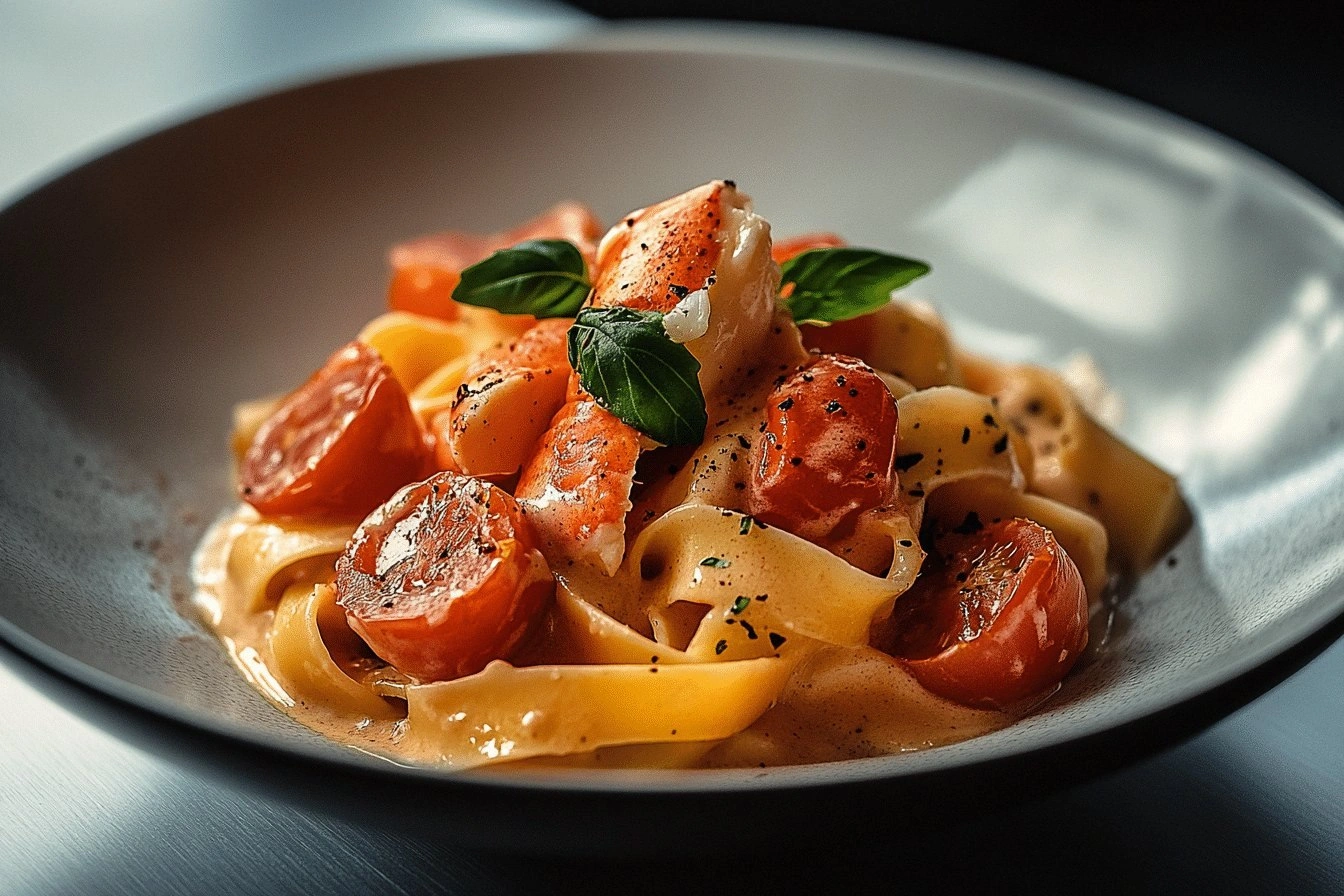
- Serve immediately, garnished with extra parmesan and basil leaves, and a drizzle of olive oil for shine. The dish should look glossy, with a vibrant green contrast from the basil. Plate it on a warm dish to keep the sauce from settling. Enjoy the moment of culinary triumph.
Insider Tricks for Flawless Results
The Temperature Rule Nobody Follows
Maintaining a gentle simmer is key to a silky sauce; high heat can cause the cream to curdle or the tomatoes to burn. I once let a sauce boil and it turned into a watery mess—don’t make that mistake. Keep the flame low after adding the cream, and let it just bubble. This rule ensures a smooth, cohesive sauce that coats the pasta beautifully.
Why Your Nose Knows Best
Smell the sauce at each stage—it’s the quickest way to gauge flavor balance. If the tomato is too sharp, let it cook longer; if the cream is too heavy, add a splash of pasta water. I’ve learned that a whiff of basil signals the perfect moment to add it. Trust your nose, it will guide you to perfection.
The 5‑Minute Rest That Changes Everything
After cooking, let the dish rest for five minutes before serving. The pasta will absorb more sauce, and the flavors will meld. I once skipped this step and the dish felt rushed; the rest made all the difference. This simple pause elevates the overall experience.
Don’t Let the Lobster Go Dry
When folding in the lobster, use a gentle toss to keep the pieces intact. Over‑mixing can break the delicate meat, turning it rubbery. Keep the heat low and add the lobster last. This ensures each bite stays juicy.
Finish With a Splash of Olive Oil
A drizzle of high‑quality olive oil adds shine and a subtle fruity note. It also helps the sauce cling to the pasta. I always finish with a splash before plating. This final touch makes the dish look restaurant‑ready.
Creative Twists and Variations
This recipe is a playground. Here are some of my favorite ways to switch things up:
Mediterranean Flair
Swap the tomato puree for sun‑dried tomato paste and add a handful of Kalamata olives. The olive oil becomes a briny backdrop, and the olives add a salty crunch. Serve with a side of crusty bread to soak up the sauce.
Spicy Kick
Introduce red pepper flakes or a dash of harissa to the sauce for heat. The spice balances the richness of the cream and the sweetness of the lobster. This version is perfect for adventurous diners who love a fiery bite.
Vegan Adaptation
Replace heavy cream with coconut milk and use a plant‑based parmesan. The coconut adds a subtle tropical sweetness that pairs well with the tomatoes. This version keeps the dish creamy while being completely dairy‑free.
Pesto Fusion
Stir in a spoonful of basil pesto after the cream, creating a green, herbaceous layer. The pesto adds depth and a fresh, nutty flavor that complements the lobster. This variation is ideal for pesto lovers.
Creamy Mushroom Twist
Saute sliced mushrooms with the garlic before adding the tomatoes. The earthy flavor pairs beautifully with the lobster and cream. This version adds a meaty texture that satisfies vegetarians.
Gluten‑Free Version
Use gluten‑free pasta such as rice or quinoa pasta. The sauce will cling just as well, and the dish remains fully gluten‑free. This adaptation allows everyone to enjoy the creamy tomato lobster experience.
Storing and Bringing It Back to Life
Fridge Storage
Store the sauce and pasta separately in airtight containers for up to 3 days. Keep the sauce chilled and the pasta in a separate container to prevent it from becoming soggy. Reheat gently on the stove, adding a splash of pasta water if needed.
Freezer Friendly
Freeze the sauce in a freezer‑safe container for up to 2 months. The lobster pieces may lose some texture, so it’s best to reheat quickly and serve immediately. Thaw overnight in the refrigerator before reheating.
Best Reheating Method
Reheat on low heat, stirring frequently, and add a tiny splash of water or broth to restore moisture. The sauce should be silky again, not dry or separated. A quick stir and a splash of water will bring it back to its original glory.