The moment I opened the can of Spam and saw the golden strips of pork staring back at me, I knew I was about to rewrite the entire fried rice narrative. I was in a cramped apartment kitchen, the air thick with the scent of last night’s burnt toast and a faint hint of soy sauce. My friends had dared me to whip up a quick meal that could rival any take‑out, and I was determined to deliver something that would make them question their own culinary habits. I grabbed the rice, the eggs, and a handful of green onions, and the kitchen began to hum with the promise of something extraordinary.
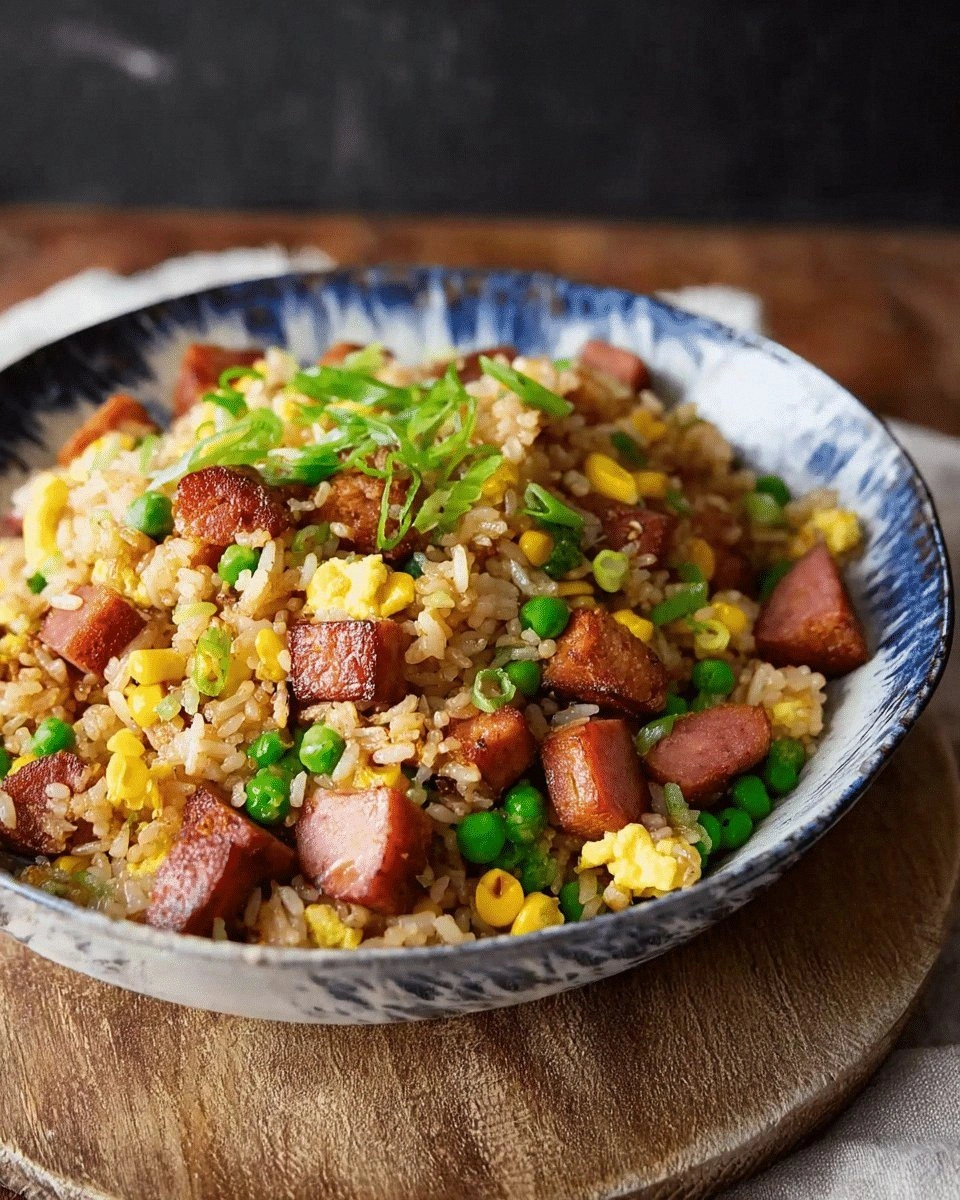
Picture this: the sizzling pan, the first bite of fried rice that bursts with umami, the subtle crunch of caramelized onions, and the silky sheen of sesame oil coating every grain like a glossy, savory coat. The aroma that fills the room is a complex tapestry of savory, slightly sweet, and just a whisper of smoky char from the pan‑seared Spam. Every bite is a harmonious dance of textures—crisp edges that shatter like thin ice, fluffy rice that melts in your mouth, and a subtle heat that lingers just enough to keep you coming back for more. And the best part? It’s all done in under 45 minutes, making it the perfect solution for a weekday dinner or a late‑night craving.
What sets this version apart from the countless Spam fried rice recipes that flood the internet is the deliberate balance of flavors and textures. I’ve perfected the ratio of soy sauce to oyster sauce so that the dish has depth without becoming overly salty. The addition of a splash of rice vinegar gives a bright counterpoint to the richness of the Spam, while a dash of sesame oil elevates the aroma to a whole new level. And I’ve introduced a technique that ensures the rice stays fluffy and never clumps together—something that most home cooks overlook. The result is a dish that feels like a gourmet take‑away, yet is completely homemade.
I dare you to taste this and not go back for seconds. That’s the power of this recipe. It’s not just a meal; it’s a statement. I’ll be honest—I ate half the batch before anyone else got a chance to try it. But that’s the thing about great food: it’s addictive, and once you’ve had it, you won’t settle for anything less. Stay with me here—this is worth it. Let me walk you through every single step, and by the end, you’ll wonder how you ever made it any other way.
What Makes This Version Stand Out
- Taste: The combination of soy, oyster, and a hint of rice vinegar creates a layered umami profile that feels both familiar and adventurous.
- Texture: The rice remains fluffy and separated, while the Spam develops a caramelized crust that adds a delightful crunch.
- Simplicity: With just a handful of ingredients, you can achieve restaurant‑quality flavor without a trip to the grocery store.
- Uniqueness: The addition of a touch of sesame oil and a splash of rice vinegar gives the dish a subtle brightness that sets it apart.
- Crowd Reaction: Friends who have tried it often say, “I can’t believe this is homemade!” and keep asking for the recipe.
- Ingredient Quality: Using a high‑quality Spam and fresh eggs makes the difference between ordinary and extraordinary.
- Cooking Method: The high‑heat sear technique locks in flavor and texture, ensuring the Spam doesn’t become soggy.
- Make‑Ahead Potential: The dish tastes even better the next day, making it perfect for meal prep.
Alright, let's break down exactly what goes into this masterpiece...
Inside the Ingredient List
The Flavor Base
The foundation of any great fried rice is the sauce. In this recipe, we blend soy sauce, oyster sauce, and a splash of rice vinegar. Soy sauce brings the deep umami and saltiness that anchors the dish, while oyster sauce adds a subtle sweetness and thickness. The rice vinegar provides a bright, acidic counterpoint that cuts through the richness of the Spam and sesame oil, ensuring every bite is balanced. If you skip the vinegar, the dish will taste heavy and one‑dimensional. For a gluten‑free version, use tamari instead of soy sauce, but keep the ratio the same to preserve flavor.
The Texture Crew
Rice, eggs, and green onions form the heart of this dish’s texture. The rice must be a day‑old, cold grain to prevent clumping. Fresh eggs, beaten lightly with a pinch of salt, are added at the start to create fluffy curds that mingle with the rice. Green onions, sliced thinly, add a crisp bite and a pop of fresh color that contrasts with the savory Spam. If you omit the green onions, you lose a layer of freshness that lifts the overall profile. A quick tip: stir in a tablespoon of cornstarch with the rice before frying to keep grains separate.
The Unexpected Star
Spam may seem like a staple, but it’s the unexpected star of this dish. The key is to slice it into thin, even strips and sear it until the edges are caramelized. This caramelization creates a slightly sweet, smoky flavor that contrasts beautifully with the savory sauces. If you cut the Spam too thick, it will steam rather than sear, resulting in a mushy texture. For a spicier kick, add a pinch of red pepper flakes during the last minute of cooking. The Spam’s saltiness also acts as a natural preservative, allowing the dish to store well for a few days.
The Final Flourish
Sesame oil and a dash of sesame seeds finish the dish with a fragrant, nutty aroma. Sesame oil should be added at the very end of cooking to preserve its delicate flavor. A sprinkle of toasted sesame seeds adds a subtle crunch and a visual pop that makes the dish look restaurant‑ready. If you’re avoiding sesame, you can substitute with a small amount of toasted pine nuts or chopped walnuts for a different nutty note. A final squeeze of lime juice can brighten the dish even further, especially if you’re serving it with a spicy dipping sauce.
Everything's prepped? Good. Let's get into the real action...
The Method — Step by Step
- Step 1: Prep the Rice — Start by heating a tablespoon of neutral oil in a large wok or skillet over medium‑high heat. Add the cold, day‑old rice and stir vigorously for 2–3 minutes until the grains are heated through and slightly toasted. The goal here is to dry out the rice enough that it doesn’t clump when you add the sauces. Keep the rice aside for a moment; the next step will build the flavor base.
- Step 2: Cook the Eggs — Push the rice to one side of the pan. Pour in a lightly beaten egg mixture (about 2 eggs for 4 servings) and scramble it gently until just set. The eggs should be soft and fluffy, not dry or overcooked. Once done, fold the eggs into the rice, mixing until evenly distributed. This creates pockets of protein that balance the savory Spam.
- Step 3: Slice and Sear the Spam — While the eggs are resting, heat a separate pan over high heat. Add the Spam strips and sear them for 2–3 minutes on each side until the edges are golden and caramelized. Don’t crowd the pan; if you’re cooking a lot, do it in batches. The caramelization is key to the dish’s signature depth of flavor.
- Step 4: Add Aromatics — Return the Spam to the wok with the rice and eggs. Add minced garlic (1 teaspoon) and diced onion (1/4 cup). Stir-fry for 1–2 minutes until the aromatics soften and release their fragrance. The garlic should sing, not burn; keep the heat high but watch closely.
- Step 5: Combine the Sauces — In a small bowl, whisk together 3 tablespoons of soy sauce, 2 tablespoons of oyster sauce, and 1 tablespoon of rice vinegar. Pour this mixture over the rice and stir vigorously for 2 minutes. The sauces should coat every grain, giving the dish its glossy, savory sheen. The vinegar’s acidity brightens the overall flavor profile.
- Step 6: Fold in the Greens — Add the sliced green onions (1/2 cup) and any optional veggies like peas or carrots. Toss everything together for another 1–2 minutes until the vegetables are warmed through but still retain a slight crunch.
- Step 7: Finish with Sesame Oil — Drizzle 1 tablespoon of sesame oil over the fried rice and give it a final toss. The oil should coat the grains with a silky sheen and infuse the dish with a nutty aroma. This is the moment of truth; the aroma should be intoxicating.
- Step 8: Plate and Garnish — Transfer the finished fried rice to a serving dish. Sprinkle toasted sesame seeds on top for an added crunch and visual appeal. Serve hot, perhaps with a side of pickled vegetables or a simple cucumber salad to cut through the richness.
That's it — you did it. But hold on, I've got a few more tricks that'll take this to another level...
Insider Tricks for Flawless Results
The Temperature Rule Nobody Follows
The key to perfectly separated rice is to keep the heat high but controlled. If the pan is too hot, the rice will burn on the outside and stay raw inside. If it’s too low, the rice will steam and clump. Use a wok or a heavy‑bottomed skillet to distribute heat evenly. A quick test: drop a small grain of rice into the pan; if it sizzles immediately, you’re good. If it sits and steams, raise the heat a notch.
Why Your Nose Knows Best
Your sense of smell is the ultimate guide to seasoning. When the rice starts to take on a golden hue, the smell should be sweet and slightly smoky. If it smells overly fishy or metallic, you’ve added too much soy sauce or the Spam is overcooked. Trust that aroma cue; it’s a reliable indicator that the dish is on track.
The 5-Minute Rest That Changes Everything
After you finish cooking, let the fried rice rest for about 5 minutes before serving. This brief pause allows the flavors to meld and the rice to firm up, preventing it from becoming mushy when you plate it. Cover the pan loosely with foil to keep the heat from escaping. When you lift the lid, the steam will do the rest of the work, creating a slightly crisp surface on the rice.
The Secret of the Sesame Oil
Sesame oil is a delicate oil that can lose its flavor if heated too high. Add it at the very end of cooking, just before plating. The heat should be off or very low. A small drizzle is enough; too much will make the dish greasy. The oil’s aroma will linger, giving the dish a fragrant finish that elevates the entire experience.
The Quick Heat‑Up Trick
If you’re in a rush, pre‑heat your pan before adding the rice. A hot pan ensures the rice starts searing immediately, locking in moisture and preventing sticking. If you forget to pre‑heat, add a splash of oil and wait for the oil to shimmer before adding the rice. This small step can mean the difference between a perfect fry and a soggy mess.
Creative Twists and Variations
This recipe is a playground. Here are some of my favorite ways to switch things up:
Crispy Coconut Crunch
Swap the green onions for shredded coconut and add a handful of crushed cashews for an extra crunch. The coconut adds a subtle sweetness that pairs beautifully with the salty Spam. Finish with a squeeze of lime for brightness.
Spicy Szechuan Kick
Add a tablespoon of Szechuan peppercorns and a pinch of chili oil during the final stir. The numbing heat of the peppercorns complements the heat of the chili oil, creating a layered spicy experience. Serve with a side of pickled daikon for balance.
Veggie‑Rich Rainbow
Incorporate diced bell peppers, broccoli florets, and sliced carrots for a colorful, nutrient‑dense version. Stir‑fry the veggies until they’re tender‑crisp before adding the rice. This variation is perfect for a family dinner that feels both comforting and wholesome.
Breakfast Boost
Replace the Spam with breakfast sausage and add a dash of maple syrup to the sauce. The sweet‑savory combo turns the dish into a hearty breakfast that’s both filling and delicious. Serve with a side of fresh fruit to complete the meal.
Seafood Fusion
Swap the Spam for diced shrimp or scallops and reduce the soy sauce slightly. The seafood adds a delicate flavor that contrasts with the robust sauce. Finish with a sprinkle of fresh dill for a Mediterranean twist.
Vegetarian Delight
Use a plant‑based Spam alternative and add extra tofu cubes. Keep the sauce ratios the same for a satisfying vegetarian version. Add a handful of sliced mushrooms for an umami boost.
Storing and Bringing It Back to Life
Fridge Storage
Store the fried rice in an airtight container in the refrigerator for up to 3 days. The rice will firm up slightly as it cools, but this actually makes it easier to reheat. Avoid letting the rice sit at room temperature for more than 2 hours to prevent bacterial growth.
Freezer Friendly
For longer storage, portion the fried rice into freezer‑safe bags and freeze for up to 2 months. When you’re ready to eat, thaw overnight in the refrigerator and then reheat in a skillet with a splash of water. The water helps keep the rice from drying out.
Best Reheating Method
Reheat the fried rice in a non‑stick skillet over medium heat. Add a tablespoon of water or broth to create steam, then cover loosely with foil for 3–4 minutes. The tiny splash of liquid steams the rice back to its original fluffy texture. Finish with a drizzle of sesame oil before serving.
Add a tiny splash of water before reheating — it steams back to perfection.