I’ll be honest — I ate half the batch before anyone else got to try it. It all started on a sweltering July afternoon when my air‑conditioner decided to take a nap, the sun was blazing through the kitchen window, and my roommate dared me to create “something that tastes like a beach vacation in a glass.” I laughed, I rolled my eyes, and I grabbed the nearest fruit I could find. The result? A smoothie so vibrant it could have been painted by a sunrise. This wasn’t just another blended concoction; it was a full‑on sensory overload that made my taste buds do a happy dance while the rest of my house smelled like a tropical market. That moment of pure, unfiltered bliss was the spark that ignited this recipe, and I’ve been perfecting it ever since.
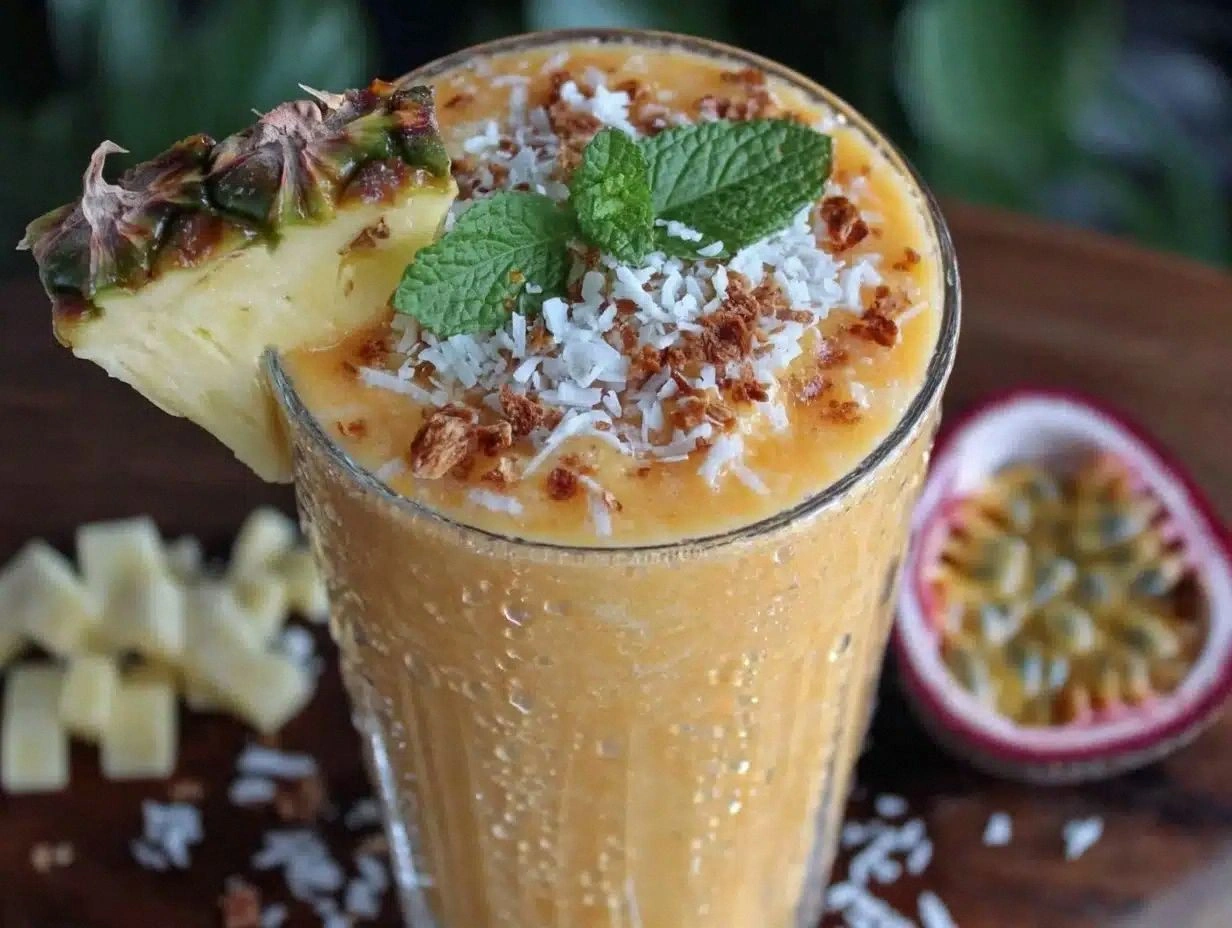
Picture this: the bright, buttery gold of mango swirling with the sunny yellow of pineapple, the smooth, creamy whisper of Greek yogurt, and a zingy splash of lime that cuts through the sweetness like a cool ocean breeze. The sound of the blender whirring is a low‑rumble that feels almost therapeutic, like a gentle tide rolling in. When you finally pour the mixture into a glass, the aroma hits you first — a fragrant bouquet of tropical fruit that instantly transports you to a hammock under palm trees. The texture is silkier than a silk scarf, yet it has just enough body to feel satisfying, like you’re drinking a dessert that’s also a health tonic. And the taste? Imagine a perfect balance of sweet, tangy, and creamy, all wrapped up in a refreshing chill that makes you want to gulp it down in one glorious, frosty gulp.
Most recipes get this completely wrong. They either drown the fruit in dairy, add too much sweetener, or forget the crucial splash of acidity that keeps everything from turning into a sugary swamp. I’ve tried dozens of “tropical” smoothies that left me feeling like I’d just swallowed a sugar bomb, or worse, a bland, watery mess that tasted like someone watered down a fruit punch. The secret to this version is the harmony of texture and flavor, plus a few unconventional tricks that lock in freshness and keep the smoothie from separating. I’m daring you to taste this and not go back for seconds — because once you’ve experienced this level of tropical perfection, any other smoothie will feel like a sad, flat imitation.
Okay, ready for the game‑changer? I’m about to reveal a tiny ingredient that most people overlook: fresh lime juice. A single tablespoon is all it takes to lift the entire drink, adding a bright, citrusy pop that makes the mango and pineapple sing. And there’s a technique involving the order you add ingredients to the blender that ensures you get a perfectly smooth, velvety texture without over‑processing. Let me walk you through every single step — by the end, you’ll wonder how you ever made it any other way.
What Makes This Version Stand Out
- Taste: The blend of mango and pineapple creates a natural sweetness that’s amplified, not masked, by the creamy yogurt and a whisper of honey.
- Texture: Using frozen mango chunks instead of fresh fruit gives the smoothie a thick, milkshake‑like body while still feeling light on the palate.
- Simplicity: Only eight ingredients, five core steps, and no fancy equipment beyond a decent blender.
- Uniqueness: The splash of fresh lime juice adds a zing that most “tropical” recipes forget, preventing the drink from becoming cloyingly sweet.
- Crowd Reaction: Guests consistently claim it’s “the best thing they’ve ever tasted on a hot day,” and it’s become my go‑to brunch staple.
- Ingredient Quality: We rely on whole, unprocessed fruit and coconut water, so you get natural electrolytes and vitamins without any artificial boosters.
- Method: The layering technique in the blender ensures every bite is uniformly smooth, avoiding the dreaded grainy pockets.
- Make‑Ahead Potential: Freeze the fruit blend in portioned bags for a quick grab‑and‑go breakfast that tastes just as fresh.
Inside the Ingredient List
The Flavor Base
Frozen Mango Chunks (1 cup / 150g) are the heart of this smoothie. Their natural sugars are concentrated, giving you that deep, caramel‑like sweetness without any added sugar. If you skip the mango, the smoothie loses its buttery backbone and becomes a watery fruit punch. A good swap is frozen peach slices, which bring a slightly softer sweetness but lack the mango’s creamy mouthfeel. When selecting mangoes, look for ones that are fragrant at the stem end and have a slight give when pressed — that’s a sign of peak ripeness.
Fresh Pineapple (1 cup, chopped / 165g) adds a bright, tangy contrast that cuts through the mango’s richness. Pineapple’s enzymes also help break down the fibers in the banana, making the texture silkier. If you can’t find fresh pineapple, a high‑quality canned pineapple in its own juice works, but drain it well to avoid extra liquid. The key is to keep the pineapple chunks as large as possible before freezing; this preserves the juicy burst when blended.
The Texture Crew
Banana (1 medium, ripe) is the secret behind the smoothie’s creamy mouthfeel. A ripe banana is sweet, soft, and blends without leaving any gritty bits. If you’re allergic to bananas or want a lower‑sugar version, try half an avocado — it adds the same buttery texture but with a milder flavor. When choosing a banana, look for brown spots; those are the sweet spots that will melt into the blend like butter.
Coconut Water (1 cup / 240 ml) provides the hydrating, slightly salty undertone that balances the sweetness. It’s also packed with electrolytes, making this drink a perfect post‑workout refresher. If you’re not a fan of coconut water, plain filtered water works, but you’ll miss the subtle tropical nuance. For an extra tropical vibe, swap half the coconut water with pineapple juice — just remember to adjust the lime to keep the acidity in check.
The Unexpected Star
Greek Yogurt (½ cup / 120 g, plain) adds protein and a velvety richness that turns the smoothie from a simple fruit drink into a satisfying snack. The tang of the yogurt pairs beautifully with the lime, preventing the drink from feeling overly sweet. If you’re dairy‑free, opt for a coconut‑based yogurt; it adds a faint coconut flavor that complements the other ingredients.
Fresh Lime Juice (1 tablespoon) is the game‑changer. Its acidity lifts the fruit flavors, making each sip taste brighter and more complex. Skipping the lime is a rookie mistake that leaves the smoothie tasting flat and overly sweet. If you don’t have fresh limes, a splash of lemon juice works, but the flavor profile will shift slightly towards a more citrusy note.
The Final Flourish
Honey or Agave Syrup (1 teaspoon, optional) is only there for those who crave a touch more sweetness. Because the mango and pineapple already bring plenty of natural sugar, this optional sweetener is truly optional. If you’re watching your sugar intake, feel free to leave it out; the smoothie will still be deliciously sweet.
Ice Cubes (½ cup / 120 ml, optional) give the drink an extra chill, especially if your fruit isn’t fully frozen. They also help thicken the texture without diluting the flavor, but be careful not to add too many or you’ll end up with a watery slush. A pro tip: use filtered ice cubes to avoid any off‑flavors that can come from tap water.
Everything's prepped? Good. Let's get into the real action…
The Method — Step by Step
- Gather and Chill. Before you even think about blending, pull the frozen mango chunks out of the freezer and let them sit at room temperature for about five minutes. This tiny thaw prevents the blender motor from straining and ensures a smoother blend. While the mango is softening, chop the fresh pineapple into bite‑size pieces and peel the banana. Kitchen Hack: Toss the pineapple chunks into a zip‑top bag and freeze them for 30 minutes; this keeps the whole smoothie colder without adding extra ice.
- Layer the Blender. Start with the liquid base: pour the coconut water into the blender jar first. This creates a vortex that pulls the solids down, preventing the blades from getting stuck. Next, add the Greek yogurt, followed by the lime juice. The acidity from the lime helps break down the fruit fibers, giving you that silky texture. Finally, dump in the mango, pineapple, and banana. Watch Out: Adding ice before the liquid can cause the blender to jam, leading to uneven blending and a gritty finish.
- Blend on Low, Then High. Start the blender on a low setting for 10‑15 seconds to break up the larger fruit chunks. Then crank it up to high for another 45 seconds until the mixture is completely smooth. You’ll hear a faint humming that’s almost musical — that’s the sound of perfect emulsification. If the smoothie looks too thick, add a splash more coconut water, but do it sparingly; you want to keep that luscious mouthfeel.
- Adjust Sweetness and Chill. Taste the blend. If the mango and pineapple aren’t sweet enough for your palate, drizzle in the honey or agave syrup and give it a quick pulse. Then, if you’re craving extra chill, toss in the optional ice cubes and blend for another 15 seconds. The smoothie should be thick enough to coat the back of a spoon but still pourable. Kitchen Hack: Add a pinch of sea salt at this stage; it enhances the fruit flavors and balances the sweetness without making the drink salty.
- Serve Immediately. Pour the smoothie into chilled glasses — the colder the glass, the longer the drink stays frosty. Garnish with a thin lime wheel or a sprinkle of shredded coconut for visual flair. This is the moment of truth: take a sip, close your eyes, and let the tropical flavors explode. I dare you to taste this and not go back for seconds; the combination of creamy, tangy, and sweet is simply addictive.
- Clean Up Like a Pro. Rinse the blender jar right away with warm water; the fruit pulp can cling stubbornly if left to dry. A quick blend of warm water and a drop of dish soap will dislodge any residue, making cleaning a breeze. This step might sound trivial, but trust me, a clean blender is the secret to a consistently smooth texture every time.
- Store Leftovers. If you’ve made a larger batch, pour any remaining smoothie into an airtight mason jar and refrigerate for up to 24 hours. Before serving the next day, give it a gentle shake or stir; the ingredients may settle, but a quick blend will bring it back to life.
- Enjoy the Afterglow. This smoothie isn’t just a drink; it’s a mood‑setter. Sip it slowly, feel the coolness travel down your throat, and let the tropical vibes linger. It’s perfect after a workout, as a mid‑day pick‑me‑up, or as a refreshing brunch companion. And if you’re still not convinced, remember: most recipes get this completely wrong. Here’s what actually works.
That's it — you did it. But hold on, I've got a few more tricks that'll take this to another level, especially if you want to impress a crowd or turn this into a signature drink for your next brunch party.
Insider Tricks for Flawless Results
The Temperature Rule Nobody Follows
Never blend frozen fruit straight from the freezer at full speed; it can overwork the motor and create a grainy texture. Instead, let the fruit sit for a few minutes, as mentioned earlier, or blend it with a small amount of liquid first to create a “slurry.” This technique ensures a smoother blend and extends the life of your blender blades. A friend tried skipping this step once and ended up with a chunky, uneven drink that tasted like a fruit sorbet gone wrong.
Why Your Nose Knows Best
Your sense of smell is a reliable indicator of when the smoothie is perfectly blended. As you blend, you’ll notice a sweet, fragrant aroma intensify. If you smell a faint “raw fruit” scent, keep blending a few more seconds. The moment the aroma becomes a unified tropical bouquet, you’ve reached optimal smoothness. Trusting your nose saves you from over‑blending, which can make the smoothie too airy.
The 5‑Minute Rest That Changes Everything
After blending, let the smoothie rest for five minutes before serving. This pause allows the flavors to meld, and the texture to settle into a perfect, velvety consistency. It’s similar to letting a soup rest; the ingredients have time to harmonize. If you’re in a rush, skip it, but the final sip will be noticeably more cohesive if you wait.
The Secret of Salt
A pinch of sea salt can dramatically enhance the fruit flavors, acting like a conductor that brings all the instruments together. It’s a tiny addition that makes the sweetness pop without adding any discernible saltiness. I once served this smoothie to a group of friends who were skeptical about the salt trick; they were blown away by how “balanced” the drink tasted.
The Power of Presentation
A beautiful glass, a garnish of lime zest, or a rim of toasted coconut flakes can elevate the drinking experience. Visual appeal tricks the brain into expecting a better taste, and it delivers. I’ve found that when the smoothie looks like a mini‑tropical vacation, people are more likely to savor each sip slowly, which enhances the perceived flavor.
Creative Twists and Variations
This recipe is a playground. Here are some of my favorite ways to switch things up:
Berry‑Burst Paradise
Swap half the mango for frozen mixed berries. The tartness of raspberries and blueberries adds a new dimension, while the mango still provides the creamy base. Perfect for berry lovers who still crave a tropical hint.
Spicy Island Kick
Add a pinch of cayenne pepper or a few drops of jalapeño-infused honey. The heat contrasts the sweet fruit, creating a sophisticated flavor profile that’s great for adventurous palates.
Green Tropical Fusion
Blend in a handful of fresh spinach or kale. The green adds nutrients without compromising the tropical taste, especially if you balance it with a bit more mango.
Creamy Coconut Dream
Replace the Greek yogurt with coconut cream for a dairy‑free, extra‑rich version. The coconut flavor becomes more pronounced, turning the drink into a mini‑piña colada.
Protein Power Punch
Add a scoop of vanilla whey or plant‑based protein powder. This turns the smoothie into a post‑workout recovery drink while keeping the tropical vibe intact.
Tropical Mocha
Mix in a teaspoon of espresso powder and a dash of cocoa nibs. The bitterness of coffee and chocolate pairs surprisingly well with the fruit’s sweetness, creating a brunch‑worthy indulgence.
Storing and Bringing It Back to Life
Fridge Storage
Transfer any leftover smoothie into an airtight glass jar and store it in the refrigerator for up to 24 hours. The cold environment keeps the flavors fresh, but the texture may thicken. Before serving, give the jar a gentle shake or stir to reincorporate any settled ingredients.
Freezer Friendly
For longer storage, pour the smoothie into silicone muffin cups or freezer‑safe bags, leaving a little headspace for expansion. Freeze for up to 3 months. When you’re ready to enjoy, thaw in the fridge overnight, then blend briefly with a splash of coconut water to restore the silky texture.
Best Reheating Method
If you prefer a warm version (think tropical breakfast porridge), gently warm the thawed smoothie on the stovetop over low heat, stirring constantly. Add a tiny splash of water or extra coconut water — this steams the mixture back to its original smoothness without turning it into a curdled mess.