It started with a kitchen catastrophe that would have made my neighbors think I was auditioning for a cooking reality show. I had just decided to try my hand at a quick seafood dish after a long day, and the moment the octopus hit the pan, a thunderous splash echoed through the kitchen. I was halfway through a bland stir‑fry when a burst of heat and aroma hit me like a punchline—my eyes widened, my nose tingled, and I realized I had stumbled upon a culinary revelation. That single sizzling moment turned a routine meal into a quest to recreate that exact, fiery, succulent flavor on a plate again and again.
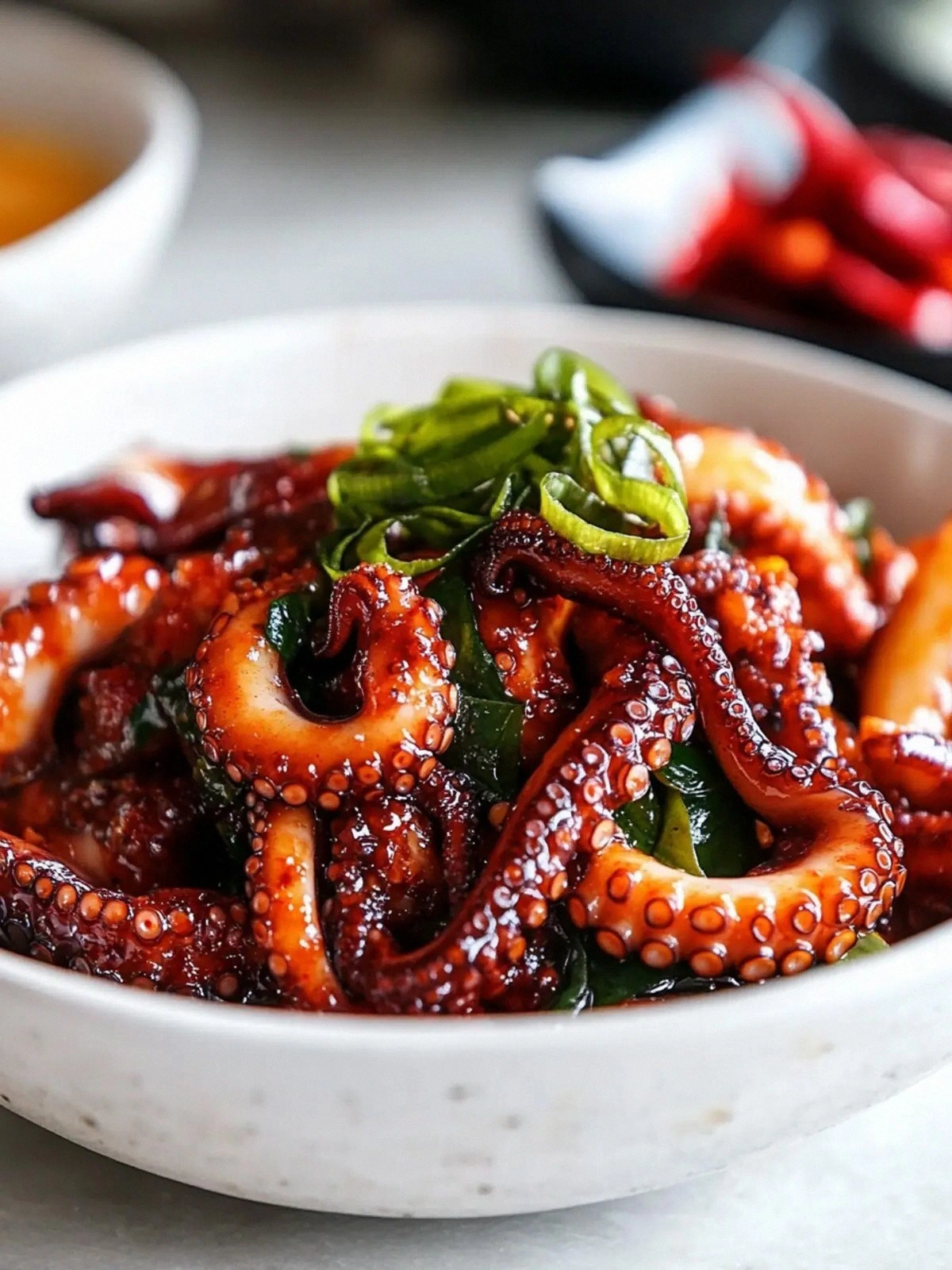
Picture this: the octopus, tender as a cloud yet firm enough to hold its shape, coated in a glossy, peppery sauce that shimmers like liquid amber. The scent of garlic and dried red pepper powder rises in a dance, mingling with the subtle sweetness of maesil juice and the umami depth of soy sauce. When you take your first bite, the crunch of the lightly fried flour coating gives way to the chewy, tender meat, while the heat from the red pepper powder lingers, leaving a faint, comforting warmth that spreads through your palate. The green onion adds a fresh, peppery bite that cuts through the richness, creating a balanced symphony of flavors that sings in your mouth.
What makes this version stand out is that it’s not just about the octopus; it’s about how every component works in harmony, from the first sizzle to the final garnish. The sauce is a secret blend that coats the octopus like velvet, the flour coating provides a crisp texture that shatters like thin ice, and the balance of sweet and spicy keeps the dish from tipping into one extreme. I dare you to taste this and not go back for seconds—because once you’re hooked, there’s no going back to a bland alternative. The best part? It’s simple enough for a novice cook yet sophisticated enough to impress even the most seasoned foodie.
I’ve spent nights tweaking the ratios, testing the timing, and refining the technique until I could walk you through every single step with confidence. By the end of this guide, you’ll wonder how you ever made it any other way, because the method I’ll share is the ultimate shortcut to a restaurant‑quality dish at home. Let me walk you through every single step — by the end, you’ll wonder how you ever made it any other way.
What Makes This Version Stand Out
- Taste: The sauce is a perfect marriage of heat, sweetness, and umami that envelops the octopus, creating a flavor profile that’s both comforting and exhilarating. The subtle sweetness of maesil juice balances the fiery kick of dried red pepper powder, leaving a lingering finish that makes you crave more.
- Texture: The flour coating provides a delicate crunch that breaks apart into a silky, tender bite, while the octopus itself remains moist and chewy. The contrast between the crisp exterior and the soft interior is a textural delight that keeps the dish interesting from the first bite to the last.
- Ingredient Quality: Using fresh, high‑quality octopus ensures the meat is tender and flavorful. Pairing it with premium soy sauce and maesil juice adds depth, while the simple flour coating keeps the dish approachable.
- Speed: The entire process takes less than 45 minutes from start to finish, making it a perfect weeknight dinner or a last‑minute dinner party staple.
- Versatility: The base recipe can be tweaked with different spices, sauces, or side dishes, allowing you to customize it to suit any palate or occasion.
- Make‑ahead Potential: The dish can be prepared ahead of time and reheated without losing its texture or flavor, making it ideal for meal prep or entertaining.
Inside the Ingredient List
The Flavor Base
The sauce is the heart of this dish, and it’s built on a simple yet powerful combination of minced garlic, dried red pepper powder, soy sauce, and maesil juice. Each element contributes a distinct layer: garlic brings aromatic warmth, the pepper powder injects heat, soy sauce adds savory depth, and maesil juice introduces a subtle fruitiness that cuts through the richness. Together they create a sauce that clings to the octopus, ensuring every bite is packed with flavor. If you skip the maesil juice, the dish will still work but will lack that unique sweet undertone that balances the spice.
The Texture Crew
Flour is used to create a light, crispy coating that gives the dish its signature crunch. When the flour is lightly tossed with the octopus, it forms a golden shell that crisps up beautifully in the pan, offering a delightful contrast to the tender meat inside. The flour also helps the sauce adhere better, creating a glossy, caramelized finish. If you’re avoiding wheat, a simple swap with chickpea flour or rice flour will still provide a crisp texture while adding a subtle nutty flavor.
The Unexpected Star
Mirim, a Korean rice wine, is a hidden gem in this recipe. It adds a subtle sweetness and helps tenderize the octopus, making it even more succulent. Mirim also helps balance the heat from the red pepper powder, creating a harmonious flavor profile that’s not too overpowering. If you don’t have mirim on hand, a splash of dry white wine or even a pinch of sugar can serve as a temporary replacement, though the nuance of mirim will be lost.
The Final Flourish
Green onion adds a bright, fresh note that cuts through the richness of the sauce, providing a clean finish that lingers on the palate. The stalks also add a subtle crunch and a pop of color that elevates the dish visually. If you’re looking for a different herbaceous touch, consider a sprinkle of fresh cilantro or a dash of sesame seeds for an extra layer of flavor.
Everything's prepped? Good. Let's get into the real action...
The Method — Step by Step
- Begin by cleaning the octopus if you’re working with a whole specimen. Rinse it under cold water, pat dry, and then cut into bite‑sized pieces. Make sure each piece is uniform to ensure even cooking. If you’re using pre‑cleaned small octopus, simply give them a quick rinse and pat dry before moving on.
- In a large mixing bowl, combine the flour with a pinch of salt and pepper. Toss the octopus pieces in the flour mixture until each piece is lightly coated. The flour should form a fine dusting that will crisp up during cooking. Shake off any excess flour to avoid a soggy texture.
- Heat a wok or large skillet over medium‑high heat and add 2 tablespoons of oil. Once the oil shimmers, add the flour‑coated octopus pieces in a single layer, ensuring they don’t crowd the pan. Let them sear for about 2 minutes on each side until they develop a golden brown crust. The sizzle when the octopus hits the pan? Absolute perfection.
- In a separate bowl, whisk together minced garlic, dried red pepper powder, soy sauce, maesil juice, sugar, and mirim. Stir until the sugar dissolves completely, creating a glossy sauce that’s ready to coat the octopus. The balance of sweet and spicy in this sauce is key—adjust the pepper powder to your heat tolerance.
- Once the octopus pieces are golden, pour the sauce over them, stirring gently to coat each piece evenly. Reduce the heat to medium, and let the sauce simmer for 3–4 minutes, allowing the octopus to absorb the flavors and the sauce to thicken slightly. Watch the edges; they should start pulling away from the pan, indicating the sauce is thickening.
- Add the green onion, cutting them into thin rings, and toss everything together. The onion will release a subtle sweetness that balances the heat from the pepper powder. Continue to cook for another 2 minutes, letting the onion soften slightly while the flavors meld.
- Before you plate, give the dish a quick taste test. If it needs more heat, sprinkle a dash of extra red pepper powder or a few drops of chili oil. If it’s too sharp, add a splash of water or a drizzle of sesame oil to mellow the intensity.
- Serve the spicy stir‑fried small octopus immediately over steamed rice or a bed of fresh greens. Garnish with additional green onion or a sprinkle of sesame seeds for an extra pop of color and texture. The dish is best enjoyed hot, when the flavors are at their most vibrant and the crust is at its crispiest.
That’s it — you did it. But hold on, I’ve got a few more tricks that’ll take this to another level…
Insider Tricks for Flawless Results
The Temperature Rule Nobody Follows
Many cooks assume that a high heat is always best for searing seafood, but too much heat can cause the octopus to toughen. Aim for a medium‑high heat that allows the surface to crisp without overcooking the interior. A quick test: drop a small piece of octopus into the pan; if it sizzles but doesn’t brown instantly, you’re in the sweet spot. This subtle adjustment keeps the meat tender and juicy.
Why Your Nose Knows Best
The aroma of garlic and dried red pepper powder is the first indicator that the sauce is developing the right depth. When the scent starts to intensify and the garlic turns golden, you’re ready to add the octopus. If you wait too long, the garlic can burn and create a bitter flavor. Trust your nose to guide you through each stage.
The 5‑Minute Rest That Changes Everything
After cooking, let the dish rest for five minutes before plating. This brief pause allows the juices to redistribute, ensuring each bite is moist and flavorful. It also gives the sauce time to thicken slightly, giving the dish a glossy finish that looks as good as it tastes.
The Quick Stir to Prevent Clumping
When you add the sauce, stir vigorously for the first minute to ensure the flour coating dissolves into a smooth glaze. This prevents clumping and ensures every piece of octopus is evenly coated. A quick, vigorous stir also helps the sauce caramelize slightly, adding a subtle nutty flavor.
The Freshness Check
Always use fresh octopus for the best texture. Look for a firm, slightly translucent flesh with a clean, briny smell. Avoid octopus that feels mushy or has a strong fishy odor, as these will not hold up to the high heat and can become rubbery.
The Final Touch of Sesame Oil
A drizzle of toasted sesame oil just before serving adds a nutty aroma that elevates the dish. The oil’s high smoke point also ensures it doesn’t burn during the final stir, giving the dish a subtle finish that lingers on the palate.
Creative Twists and Variations
This recipe is a playground. Here are some of my favorite ways to switch things up:
Citrus Burst
Add a splash of fresh lime juice and a handful of chopped cilantro for a bright, tangy twist. The citrus cuts through the richness, while the cilantro adds a fresh herbal note. This variation is perfect for summer gatherings.
Miso Infusion
Replace soy sauce with a tablespoon of white miso paste for a deeper umami flavor. The miso also adds a subtle sweetness that balances the heat. This version pairs well with a side of steamed bok choy.
Spicy Korean Kimchi
Stir in a handful of chopped kimchi during the last minute of cooking. The fermented flavors add depth and a pleasant tang. This variation is great for a hearty, Korean‑style dinner.
Garlic Parmesan Crunch
Sprinkle grated Parmesan cheese and minced garlic over the finished dish for a cheesy, savory finish. The cheese melts slightly, creating a gooey texture that contrasts with the crisp crust. This version is a crowd‑pleaser for family gatherings.
Thai Basil Kick
Add fresh Thai basil leaves and a drizzle of fish sauce for an authentic Thai flavor profile. The basil’s peppery aroma complements the heat from the red pepper powder, while the fish sauce adds a savory depth. Serve over jasmine rice for an aromatic meal.
Mediterranean Twist
Replace the mirim with a splash of dry white wine and finish with a squeeze of lemon. Toss in chopped olives and capers for briny notes. This Mediterranean version pairs beautifully with a side of grilled vegetables.
Storing and Bringing It Back to Life
Fridge Storage
Cool the dish completely before placing it in an airtight container. Store in the refrigerator for up to 2 days. The sauce may thicken slightly, but it will still taste delicious when reheated.
Freezer Friendly
For longer storage, divide the dish into portions and freeze in freezer‑safe bags. Consume within 3 months for best flavor. Thaw overnight in the refrigerator before reheating.
Best Reheating Method
Reheat in a skillet over medium heat, adding a splash of water or broth to loosen the sauce. Stir frequently until heated through. The tiny splash of liquid will steam the dish back to its original moistness, restoring the perfect texture.